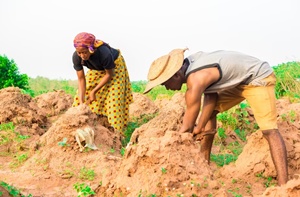
Evaluation of soil physical properties under different land uses in semi-arid Nigeria
Abstract
Soil physical properties are vital indicators of soil health and land productivity, particularly in semi-arid regions where soil degradation is a critical concern. This study evaluated the influence of different land use systems such as grazing, orchard, and irrigation on soil physical properties at Koza Integrated Farms, Maiadua Local Government Area, Katsina State, Nigeria. The investigation focused on key parameters such as soil texture, bulk density (BD), particle density (PD), porosity, organic carbon (OC), pH, electrical conductivity (EC), and structural stability index (SSI). Composite soil samples were collected and analyzed using standard laboratory procedures. Descriptive statistics showed that soils in the area are predominantly sandy, with an average sand content of 91%, silt 6.8%, and clay 2.7%. Bulk density ranged from 1.34 to 1.94 g/cm³, with grazing lands recording the highest compaction. Porosity was inversely related to BD, averaging 38.6%, and EC ranged from 0.01 to 1.07 dS/m. The mean pH of 6.41 indicates a slightly acidic to neutral soil environment. Organic carbon was moderate, with a mean of 1.29%, while SSI values indicated moderate aggregate stability. Correlation analysis showed significant interdependence among parameters. Bulk density and porosity had a strong negative correlation, while clay content was positively correlated with SSI, confirming that finer particles improve structural stability. Grazing lands exhibited the most deteriorated soil properties, including high compaction and salinity, likely due to overgrazing and animal waste deposition. In contrast, orchard and irrigated lands displayed better physical conditions, attributed to organic inputs and less soil disturbance. The findings underscore the need for sustainable land use management to prevent further soil degradation. Practices such as rotational grazing, organic amendments, conservation tillage, and agroforestry were recommended to enhance soil structure and fertility. Monitoring soil health indicators and providing farmer training were also identified as essential components for effective soil conservation. This study contributes to the growing body of evidence on the impact of land use on soil health in semi-arid regions and provides practical, location-specific recommendations for improving soil quality. These interventions are crucial for sustaining agricultural productivity and mitigating land degradation under climate-sensitive conditions.
Keywords: Soil Physical Properties, Land uses, Irrigation, Grazing, Orchard, Semiarid agriculture, Katsina State, Nigeria
INTRODUCTION
Soil is the foundation of terrestrial ecosystems and the primary natural resource governing agricultural productivity. In semi‑arid environments such as those prevalent in Katsina State, Nigeria, the intrinsic quality of the soil is inherently fragile, characterized by low organic matter content, high vulnerability to erosion, and poor structural stability (Sani et al., 2025). The physical properties of soil including texture, structure, bulk density, porosity, and aggregate stability are arguably the most sensitive indicators of soil health and are critical determinants of water infiltration, aeration, and root proliferation. Changes in these properties directly impact the soil’s capacity to support crop growth and resist degradation (Blanco‑Canqui and Lal, 2008). The Mai’adua Local Government Area (LGA) is situated within the Sudan Savanna ecological zone, a region that relies heavily on agriculture for livelihood, often requiring intensive land use to meet growing population demands. Over the last few decades, the landscape has been subjected to significant anthropogenic pressures, resulting in a mosaic of distinct land management systems: intensive irrigation agriculture along water bodies, extensive communal grazing, and the development of tree‑based orchard systems. These disparate land‑use types exert fundamentally different forces on the soil’s physical matrix (Lal, 2015). Irrigation often introduces compaction and salinity risks; continuous grazing leads to trampling and structural collapse; and orchard systems, particularly those established recently, offer perennial cover but may involve initial deep tillage.
The study area, Koza Integrated Farms, located in Mai’adua LGA, represents a variety of land uses, including agricultural, forestry, and grazing systems, offering a unique case study to investigate the impact of land use on soil properties. Each land‑use type has unique impacts on soil structure, compaction, and nutrient availability. In agricultural areas, for instance, frequent tilling can lead to soil compaction and a loss of organic matter, while grazing lands may experience changes in soil porosity and bulk density due to the pressure from livestock (Muñoz‑Rojas et al., 2012). In recent years, land‑use changes have intensified due to the growing demands for food production, livestock grazing, and forestry, often leading to the degradation of soil physical properties, adversely affecting soil structure, water retention, and erosion resistance (Muñoz‑Rojas et al., 2012).
In Koza Integrated Farms, soil properties may vary significantly across different land uses, impacting the farm’s long‑term sustainability. However, a gap exists in localized research that explores the relationship between land‑use types and soil physical properties in this area. Understanding how these prevalent land‑use systems differentially alter soil physical properties is crucial for devising locally appropriate land‑management strategies. Without site‑specific data on the health status of soils under these diverse pressures, conservation efforts risk being ineffective, leading to continued soil degradation and diminished agricultural returns. This study therefore aims to provide a diagnostic evaluation of the physical quality of soils under the predominant land uses in the study area.
With an increasing need to boost agricultural productivity and maintain environmental sustainability in northern Nigeria, evaluating soil physical properties under different land uses provides valuable insights. Such knowledge is essential for developing land‑management strategies that address both productivity and soil conservation, especially in fragile ecosystems prone to degradation and desertification. The variation in soil physical properties under different land uses can influence soil quality and, consequently, the productivity and sustainability of farming systems (Blanco‑Canqui and Lal, 2008). Understanding these effects is particularly critical in regions prone to environmental challenges, such as drought and soil degradation, which are prevalent in northern Nigeria.
By examining how different land uses impact soil physical attributes, this study aims to provide insights for sustainable land‑management strategies that align with the ecological and economic needs of the region. In Koza Integrated Farms, soil properties may vary significantly across different land uses, impacting the farm’s long‑term sustainability. However, a gap exists in localized research that explores the relationship between land‑use types and soil physical properties in this area. Addressing this gap is vital for stakeholders, including farmers, environmentalists, and policy makers, who require scientifically sound data to make informed decisions on land‑use practices.
Evaluating soil physical properties under different land uses could highlight best practices for managing soil health, thereby improving agricultural productivity and supporting environmental conservation in Mai’adua Local Government Area. The sustainability of agriculture in Mai’adua and the wider semi‑arid zone is severely threatened by escalating soil degradation. Although irrigation, grazing, and orchard establishment have intensified land use, there remains a critical gap in the quantitative assessment of the specific impacts of these practices on key soil physical properties. Uncertainty surrounds the magnitude and direction of change: it is unclear whether grazing or irrigation poses a greater threat to bulk density, and whether orchard planting ameliorates or exacerbates compaction. Farmers and policy makers lack empirical evidence to determine which practices pose the greatest risk to soil integrity. Anecdotal reports suggest declining crop yields in irrigated and grazed areas, a pattern often symptomatic of underlying physical limitations such as high bulk density, low porosity, and poor water retention. Without systematic evaluation, the extent of these constraints cannot be accurately mapped or addressed.
Current land‑management and reclamation efforts rely on generalized recommendations that fail to account for the unique physical stresses induced by each land use, resulting in wasted resources and continued environmental decline particularly concerning erodibility, which is highly dependent on aggregate stability. Consequently, the core problem is the absence of empirical, comparative data that quantify the differential effects of irrigation, grazing, and orchard land uses on the physical properties of soils in Mai’adua LGA. This knowledge gap hinders the development of targeted, sustainable land‑management and reclamation strategies. The study seeks to fill this gap by quantifying how soil physical properties vary among irrigated fields, grazed pastures, and orchard systems; identifying the specific physical constraints (e.g., compaction, reduced porosity, weakened aggregate stability) that are most pronounced under each land use; and providing evidence‑based recommendations for land‑management practices that balance agricultural productivity with soil conservation in this fragile semi‑arid environment. By delivering site‑specific insights, the research will support farmers, environmentalists, and policy makers in making informed decisions that enhance both productivity and environmental sustainability in Mai’adua Local Government Area and similar semi‑arid regions.
MATERIALS AND METHODS
Experimental site
Koza Integrated Farms, located in the Maidua Local Government Area of Katsina State, is a diversified agricultural operation focused on sustainable farming practices and the development of various agricultural products. This farm is known for employing modern techniques in crop cultivation, livestock management, and aquaculture, aiming to boost agricultural productivity and support the local economy. The farm may feature activities like crop rotation, organic soil improvement, and efficient water management, which contribute to soil health and productivity. Additionally, Koza Integrated Farms plays a significant role in providing employment opportunities and training for local farmers, thus enhancing agricultural knowledge and economic development in Maidua.
Sample Collection and preparation
Sixty (60) soil samples were meticulously collected from 0-30 cm depth using a hand auger and undisturbed samples using core samplers. These samples were carefully obtained from three distinct clusters: irrigated areas, grazing areas, and orchard areas. The selection of sample locations considered the varied soil types and the historical land use and management practices. Twenty soil samples were randomly gathered within each cluster, ensuring a representative and diverse set of samples for analysis. Different sections of neighboring soil were combined and thoroughly mixed to create composite samples during collection. The collected soils were air dried, crushed using pestle and mortar and grounded to pass through 2 mm sieve and taken to the laboratory for analysis.
The samples for bulk density determination were oven dried at 105 °C for 48 hours. Disturbed soil samples on the hand, were air-dried for 24 hours, crushed gently using pestle and mortar and pass through 2 mm sieve. Particles < 2 mm were used in the laboratory analyses.
Soil Laboratory Analyses
Soil samples were analyzed for the following parameters: Particle size analysis was determined by the Bouyoucos Hydrometer (ISRIC/FAO, 2002) method. Bulk density was by core sampler method as described by (Blake and Hartge, 1986). Particle density was determined by the use of Pycnometer bottle method (Black, 1965). Total porosity was calculated from particle and bulk density values using the Hamilton relationship. The soil bulk density was evaluated using core method (Cresswell and Barton, 2003). Particle density was determined using the pycnometre method as described by Kretz (1974). The amount of pore space of the soil was calculated according to the equation of Rattan (2009). Saturated Hydraulic Conductivity was determined on core soil samples using the constant head permeametre method as described by Klute (1965) using Darcy’s Law. Structural Stability Index an index for assessing the risk of structural degradation in cultivated soils was calculated using the equation by Pieri (1992).
Statistical Analysis
Data obtained were subjected to comprehensive statistical analysis using IBM SPSS Version 25 and Microsoft Excel. Descriptive Statistics was used to compute mean, range, standard deviation, variance, skewness, and kurtosis for each parameter to understand the distribution and variability. For Inferential Statistics, a Pearson correlation matrix was generated to evaluate linear relationships among different water quality parameters and irrigation indices.
RESULTS
The results obtained from the evaluation of soil physical properties under different land uses at Koza Integrated Farms, Maidua Local Government Area, Katsina State was presented in Table 1. The discussion is based on the descriptive statistics, correlation analysis, and effects of different land use types on selected soil physical parameters. Interpretations are made with support from existing literature.
Descriptive statistics of soil physical properties
Table 1 summarizes the descriptive statistics for soil physical properties including sand, silt, clay, bulk density (BD), particle density (PD), porosity, organic carbon (OC), organic matter (OM), pH, electrical conductivity (EC), and structural stability index (SSI). These parameters indicate the general soil condition and variability across the study area.
Field soil data of table 1 describes a site dominated by a highly sandy soil texture, as indicated by the exceptionally high Mean % Sand (91.0%) and correspondingly low Mean % Clay (2.67%) and Mean % Silt (6.80%). The dominance of sand (91.0%) and the minimal percentages of clay (2.67%) and silt (6.80%) are characteristic of soil derived from quartz-rich parent materials that have undergone limited chemical weathering, or materials like dune sand or beach deposits which is characteristics of soils in semi arid regions as the soils were developed predominantly on granitic sandstone and aeolian deposits (Brady and Weil, 2017; Alemayehu and Assefa, 2021). These results agrees with the findings of Sani et al. (2019); Malgwi et al. (2000) and Voncir et al. (2008) who reported that the dominance of sand contents in Northern Nigerian soils is as a result of sorting of materials by clay eluviation and surface wind erosion. Clay and silt are products of chemical weathering, so their low percentages indicate that either the parent material lacked these components, or the soil has been subjected to significant leaching and low weathering intensity, common in coarse-textured soils (Foth, 1990). Such soils typically have poor nutrient and water retention capabilities, requiring improved management practices (Alemayehu and Assefa, 2021).
The soil is slightly acidic to neutral, with a Mean pH of 6.407, and is non-saline, demonstrated by a very low Mean Electrical Conductivity (EC) of 0.37 dS/m. The Mean pH of 6.407 is slightly acidic to neutral. This is not surprising as Sandy soils typically have a low cation exchange capacity (CEC) and low buffering capacity due to the scarcity of clay and organic matter (the two main sources of cation exchange sites). This makes them highly susceptible to changes in pH caused by leaching or the addition of acidic fertilizers (Brady and Weil, 2017). The observed pH of 6.407 suggests either the parent material was initially calcareous or rich in basic cations, providing a buffer or the climate is relatively dry or the soil is young, limiting the extent of leaching-induced acidification. The result is in agreement with the findings of Aliyu et al . (2025) and Shehu et al. (2025).
The low Mean EC (0.37 dS/m) indicates the soil is non-saline. This may be due Sandy soils are characterized by a high infiltration rate and rapid hydraulic conductivity (high permeability), which promotes the leaching (washing out) of soluble salts and cations from the soil profile during rainfall or irrigation (Foth, 1990). This high drainage prevents salt accumulation near the surface, resulting in the observed low EC values.
Key physical parameters show a Mean Bulk Density (BD) of 1.49 g/cm3 and a Mean Porosity of 38.6%. Notably, Porosity shows the highest degree of variability across the samples (Std. Deviation of 6.39), followed by the specialized SSI parameter, suggesting significant local differences in soil packing and structure, even within the context of a uniform sandy texture. The Mean Bulk Density (BD) of 1.49 g/cm3 is relatively high compared to typical values for fine-textured, highly aggregated soils (which are often <1.3 g/cm3). The mean BD (1.49 g/cm³) falls within acceptable limits but suggests moderate compaction, which could inhibit root penetration if it increases. PD (2.44 g/cm³) is consistent with mineral soils. These indicators help assess soil structural health (Ali et al., 2019).The corresponding Mean Porosity is 38.6%. This might be as a result of Sandy soils have higher bulk densities because the uniformly sized sand particles can pack together closely, maximizing particle-to-particle contact and minimizing the total pore space and grazing activities and trampling by animals (Singer and Munns, 1999; Sani et al; 2023).
Although they have large macropores (which contribute to rapid drainage), the total volume of pore space (Porosity) is generally lower than in well-aggregated clay or loam soils. The high Variance (40.9) in Porosity suggests that subtle differences in sand size distribution, degree of compaction (e.g., from machinery or trampling by animals), or aggregation across the sampling points significantly influence the packing arrangement and pore volume (Hillel, 2004). A mean porosity of 38.6 % suggests a moderately aerated soil profile. In sandy soils, porosity below 40% can limit water retention and microbial activity (Abdalla et al., 2020).This is widely observed in similar environment (Aliyu et al., 2022; Sani et al., 2022, 2023).
The soil has low to moderate organic content, with a Mean Organic Carbon (OC) of 1.29% and a Mean Organic Matter (OM) of 2.23%. The Mean OC of 1.29% and OM of 2.23% are typical for sandy soils. This is because Coarse-textured soils are well-aerated and rapidly drained, facilitating an optimum environment for microbial decomposition of organic materials. This high rate of aeration and decomposition prevents the significant accumulation of organic matter that occurs in poorly drained, finer-textured soils (Brady and Weil, 2017; Noma and Sani 2008). Furthermore, sandy soils have a very low total surface area and a low content of clay, which is the primary agent for the formation of stable organo-mineral complexes that physically protect organic carbon from decomposition (Torn et al., 1997).
Structural Stability Index (SSI): With a mean value of 3.00, the soil demonstrates moderate stability. Low clay and organic matter limit structural resilience against erosion and compaction (Ogunwole et al., 2020).
The correlation matrix (Table 2) reveals several fundamental and significant relationships among the soil parameters, primarily driven by the soil’s coarse texture. The most statistically evident and physically expected relationship is the highly significant, strong negative correlation between Porosity and Bulk Density (BD) (r = -0.938**). This confirms the reciprocal nature of these properties: as the soil becomes more compacted (higher BD), the total volume of pore space (Porosity) necessarily decreases. This is a definitive physical principle as they are mathematically and physically linked: as the density of the packed soil solids increases (higher BD), the volume of the space between them (Porosity) must decrease, and vice-versa (Hillel, 2004). The very strong negative correlation (r = -0.938**) signifies that higher compaction reduces available pore space, thereby limiting water infiltration and root aeration (Ogunwole et al., 2020).
Furthermore, the textural components are strongly interconnected: % Sand shows a highly significant, strong negative correlation with % Clay (r= -0.773**), and a significant negative correlation with % Silt (r= -0.635*), reflecting the constraint that these three percentages must sum to 100%.
A critical finding is the strong influence of physical structure (BD and Porosity) on the chemical environment. Bulk Density (BD) is highly significantly and positively correlated with both pH (r = 0.684**) and Electrical Conductivity (EC) (r = 0.755**). Conversely, Porosity shows a highly significant, strong negative correlation with both pH (r = -0.714**) and EC (r = -0.702**). This suggests that less-compacted soil with higher porosity facilitates better leaching and drainage, which helps keep the soil’s pH lower and minimizes the accumulation of soluble salts (salinity), thereby explaining the low EC. The observed strong positive correlation between BD and EC, and inversely, the strong negative correlation between Porosity and EC, highlights the crucial role of soil structure in controlling salinity. Similar strong correlations are seen with pH. This might be as a result that high Bulk Density (compacted soil), restrict hydraulic conductivity (ease of water movement), which slows down the movement of water through the soil profile (Singer and Munns, 1999). This limited water flow, especially in the sandy soil where drainage is naturally high, can lead to stagnation of water in macropores or near the surface layer under certain conditions. This reduced leaching efficiency prevents the removal of soluble salts and basic cations, allowing them to accumulate and thus resulting in higher Electrical Conductivity (salinity) and elevated pH (Brady and Weil, 2017). Conversely, soils with higher Porosity have more continuous and larger pore spaces, promoting rapid and effective leaching of salts and cations, maintaining lower EC and pH values.
Finally, % Clay exhibits a near-perfect positive correlation (r= 0.997**) with the SSI (Soil Structure Index/Indicator), clearly establishing that the SSI is a direct measure or function of the fine clay fraction, which is responsible for the formation of stable soil structure. The near-perfect positive correlation between % Clay and SSI (r = 0.997**) and the strong negative correlation between % Sand and SSI (r= -0.747**) underscores the definition of the SSI as a measure of structural quality which is as a result of Clay particles having large surface area and negative charge, allowing them to hold water and nutrients and, most importantly, form aggregates (stable clumps of soil) by interacting with organic matter and cations (Hillel, 2004).
This aggregation is the basis of good soil structure. Since sand particles do not contribute to aggregation, the Soil Structure Index (SSI) is logically almost entirely dependent on the percentage of clay available to form these stable bonds. The very low clay content of the sampled soil means that the small variations in the percentage of clay content have a dominant influence on the structural index.
Table 3 shows the effect of land use on soil physical properties and clearly demonstrates that while the fundamental sandy texture of the soil remains unaffected across the different land uses, management practices introduce significant differences in several key physical and chemical characteristics. The differences in soil properties observed across the three land uses (Irrigation, Orchard, and Grazing) are primarily driven by the physical impact of animal trampling and the subsequent changes in water dynamics and nutrient cycling inherent to each management practice, especially within the context of the low-buffering, high-leaching sandy soil. The overall soil composition is consistently high in Sand (90%) and low in Clay (2-3%). The most pronounced impact is observed in the Grazing land use, which exhibits significantly higher Bulk Density (BD) (1.71 g/cm3) compared to the Irrigation and Orchard uses (1.40 g/cm3). This elevated BD is a direct consequence of soil compaction caused by animal trampling (Chaichi et al., 2005; Bell et al., 2011; Hamza and Anderson, 2005; Siri-Prieto et al., 2007) and decreases porosity (Binkley et al., 2003). This also increases the packing density, decreases the total porosity, and significantly impedes both water infiltration and air exchange (Drewry et al., 2008).
In sandy soils as observed in the study area, the lack of cementing agents like clay or high organic matter makes them highly susceptible to compaction (Brady and Weil, 2017). This structural degradation under grazing is also strongly linked to adverse chemical changes, as Grazing soils show a significantly higher Electrical Conductivity (EC) (0.842 dS/m) and a significantly higher pH (7.180). The higher EC and pH under grazing are likely due to the reduced ability of compacted soil to leach salts and basic cations derived from animal waste, leading to their accumulation (Abu and Malgwi, 2011; Igwe et al; 1995; Oguike and Mbagwu, 2009). Conversely, the Irrigation and Orchard plots maintain lower BD and lower EC/pH values, indicating better structural stability and more efficient leaching compared to the grazed land. However, excessive irrigation without organic amendments may lead to nutrient leaching (Akinsete et al., 2021).
Orchard Land demonstrates moderate conditions in terms of BD (1.399 g/cm³), pH (6.26), and EC (0.186 dS/m), suggesting better management and organic input from tree litter. Such systems improve soil cover and aggregation over time (Alemayehu and Assefa, 2021). The lower BD in the Irrigation and Orchard plots (1.399 g/cm3) reflects less mechanical disturbance, as the soil is typically subjected to less direct pressure than a grazed area. The presence of root systems in the orchard and proper water management can help maintain some degree of aggregate stability and lower bulk density compared to heavily trodden ground (Lal, 1993; Sani et al., 2019).
The significantly higher EC (0.842 dS/m) and pH (7.180) in the Grazing plots are a consequence of the reduced ability of compacted soil to leach salts and cations because Compaction (high BD) restricts the movement of water, there by reducing the soil’s hydraulic conductivity. In the grazed areas, this restricted drainage hinders the leaching (washing out) of soluble salts and basic cations such as (Ca2+, Mg2+, etc.) that are concentrated through the deposition of animal urine and feces (Franzluebbers, 2015). The accumulation of these basic cations raises the pH toward alkalinity, and the accumulation of soluble salts increases the EC (Brady and Weil, 2017). The observed Lower EC (0.092 dS/m) and slightly acidic pH (5.780) in Irrigated Soil demonstrate effective leaching, as Irrigation is a practice where water is applied to the soil, actively promoting leaching and the removal of salts coupled with the sandy nature of the area, with high hydraulic conductivity ensure that excess water and soluble salts drain away efficiently, keeping the EC low and maintaining a lower, (Hillel, 2004).
The difference in Organic Carbon (OC) (Orchard at 1.065 % vs. Irrigation at 1.416 %) suggests land use influences organic matter management, although this difference was not statistically significant. The higher OC in the Irrigation and Grazing plots may be related to the management of crop residues or grass litter. Orchards, which often have clean cultivation or minimal understory, may have less litter input than an irrigated crop system or a managed pasture (Lal, 2004). However, the overall low OC values across all plots remain characteristic of the underlying sandy soil, which facilitates rapid organic matter decomposition (Abdulkadir et al., 2025; Musa et al., 2025; Noma and Sani, 2008).
CONCLUSION
This study, conducted at Koza Integrated Farms in Katsina State, comprehensively assessed how different land use types (grazing, orchard, and irrigated systems) impact the physical and chemical properties of sandy soils in a semi-arid environment. The research concluded that the inherently sandy texture makes these soils vulnerable to low water retention, high leaching, and erosion. The analysis revealed significant degradation under grazing, which was characterized by the highest Bulk Density (BD) and salinity (EC), and the lowest Porosity, all of which severely limit microbial activity and plant growth. In contrast, the orchard and irrigated lands maintained superior physical properties, likely due to protective soil cover, managed traffic, and regular organic matter inputs, which enhanced soil structure and reduced compaction.
The study also established key statistical relationships among the soil parameters, affirming principles of soil physics and chemistry. Specifically, the strong negative correlation between Bulk Density and Porosity confirmed that soil compaction is the primary constraint on aeration and infiltration. Furthermore, the strong positive correlation between clay content and structural stability highlighted the crucial role of fine particles and organic inputs in stabilizing the soil structure. Overall, the findings emphasize that sustainable land management is paramount for preserving soil health in the study area, and that continued degradation will undermine long-term agricultural productivity.
Based on these findings, the study puts forward eight recommendations for sustainable soil management. Key structural and biological interventions include implementing Rotational Grazing Systems to combat compaction, increasing Organic Matter Management through compost and manure application to boost porosity, and promoting Cover Cropping and Agroforestry to protect the soil surface and enhance water use efficiency. To prevent physical deterioration, the study advocates for Soil Conservation Techniques such as minimum tillage and mulching. Policy and monitoring recommendations include establishing Land Use Zoning based on suitability, conducting Regular Soil Health Monitoring via extension systems, providing Capacity Building for farmers, and adopting proper Irrigation Management to prevent waterlogging and salinity buildup.
REFERENCES
Abdalla M., Lal R., Mashali A. (2018). Effects of land use on soil physical properties in semi-arid regions of Ethiopia. Agricultural Sciences, 9: 56-66.
Abdalla M., Lal R., Mashali A. (2020). Effects of land use on soil physical properties in semi-arid regions of Ethiopia. Agricultural Sciences, 11: 51–60.
Abdulkadir A., Halilu Y., Sani S. (2022). Evaluation of physical and chemical properties of soils at Bichi Local Government Area, Kano State, Nigeria. IRE Journal, 5: 556–562.
Abdulkadir A., Manne I.Z., Sani S. (2025). Impact of distance from the water body on the point of zero charge of Dutsin-Ma Dam floodplain soils, Katsina State, Nigeria. International Journal of Bonorowo Wetlands, 15:1-6.
Akinsete S.A., Adewole M.B., Ogunleye A.O. (2016). Impacts of land use on soil properties in South-Western Nigeria. African Journal of Agricultural Research, 11: 124-133.
Akinsete S.A., Adewole M.B., Ogunleye A.O. (2021). Influence of land use practices on soil quality indicators in southwestern Nigeria. Nigerian Journal of Soil Science, 31: 112–122.
Alemayehu M., Assefa S. (2021). Effects of continuous cultivation on soil physical properties in Ethiopia. Journal of Soil Science and Environmental Management, 12: 34-42.
Ali A., Adekiya A.O., Agbede T.M., Ugbe L. (2017). Soil physical properties under different land use types in Nigeria. International Journal of Agriculture and Biology, 19: 479-486.
Ali A., Adekiya A.O., Agbede T.M., Ugbe, L. (2019). Variability in soil physical properties under different land uses in Nigeria. African Journal of Agricultural Research, 14: 350–358.
Black C.A. (1965). Methods of Soil and Plant Analyses. Agron. No. 9, Part 2 Amer. Soc. Madison.
Blake G.R., Hartge K.H. (1986). Bulk density. In: Klute A. (ed.) Methods of Soil Analyses. Part 1. 2nd ed. Agron. 9. ASA and SSA, Madison, W1, 363-375.
Blanco-Canqui H., Lal R. (2008). Soil structure and organic carbon relationships following 10 years of wheat cropping in no-till and conventional tillage. Soil Science Society of America Journal, 72: 964-970.
Brady N.C., Weil R.R. (2017). The Nature and Properties of Soils (15th ed.). Pearson.
Bronick C.J., Lal R. (2005). Soil structure and management: A review. Geoderma, 124: 3-22.
Celik I. (2005). Land-use effects on organic carbon and physical properties of soil in a southern Mediterranean highland of Turkey. Soil and Tillage Research, 83: 270-277.
Cresswell A.W., Barton M.E. (2003). Direct shear tests on an uncemented, and a very slightly cemented, locked sand. Quarterly Journal of Engineering Geology and Hydrogeology, 36: 119-132.
Drewry J.J., Paton V., Journeaux P. (2008). Effect of land use and soil type on soil bulk density and compaction. New Zealand Journal of Agricultural Research, 51: 389–396.
Esu I.E. (2010). Soil characterization and classification in Nigeria. Agriculture and Soil Science, 25: 45-52.
FAO (2006). Guidelines for Soil Description. Fourth Edition. Food and Agriculture Organization of the United Nations Rome, Italy, 109.
Franzluebbers A.J. (2015). Soil organic matter sequestration in grazed pastures. In Soil Carbon Sequestration and the Greenhouse Effect (pp. 139-161). SSSA Special Publication.
Gee G.W., Or D. (2002). Particle-size analysis. In Methods of soil analysis (pp. 255-293). Soil Science Society of America.
Hillel D. (2004). Introduction to Environmental Soil Physics. Elsevier Academic Press.
Ibrahim Raji A., Mohammed I., Abdulkadir A., Salsiu M., Sani S. (2025). Calibration and Evaluation of Ceres-Sorghum Model for Use in Sorghum (Sorghum bicolor L. Moench) Production in Sudan Savanna of Nigeria. Sahel Journal of Life Sciences, 3: 77–96.
Idris A.A., Abdullahi A., Daneji M.I., Suleiman M.S., Sani S., Nasiru A. (2024). Perceived Effects of Climate change on Farmer’s Livelihood in North Western Nigeria. International Journal of Environment, Agriculture and Biotechnology, 9: 001–012.
ISRIC/FAO (2002). Procedures for soil analysis, sixth edition. In: L.P. Van Reeuwijik (ed.), International Soil Reference and Information Center/FAO, 119.
Jury W.A., Horton R. (2004). Soil Physics (6th ed.). John Wiley Sons.
Lal R. (1993). Tillage effects on soil degradation, soil quality, and sustainability. Soil and Tillage Research, 27: 1–8.
Lal R. (2004). Soil carbon sequestration impacts on global climate change and food security. Science, 304: 1623-1627.
Lal R. (2015). Soil health and carbon management. Food and Agriculture Organization.
Lal R. (2020). Soil health and sustainability: A global challenge. Soil Science and Plant Nutrition, 66: 15-30.
Lal R., Shukla M.K. (2004). Principles of Soil Physics. CRC Press.
Mbah C.N., Mbagwu J.S.C. (2006). Soil bulk density and porosity of a Dystric Leptosol under different land use types. Geoderma, 131: 101-108.
Muhammad Amin A., Sani M., Bello Ahmad U., Sufiyanu S., Bashir Shehu H., Wada Rabiu A., Afiya Kabir L. (2019). Geo-statistical mapping of some soil fertility constraints in sorghum- based cropping system of Sudano-Sahelian zone of Nigeria. Azarian Journal of Agriculture, 6: 146–152.
Muhammad A., Musa M., Sani S., Ibrahim U.M. (2024). Environmental contamination by agrochemicals and its indiscriminate use by dry season farmers in Sudan Savannah of Katsina State. Sahel Journal of Life Sciences, 2: 67–77.
Muhammad F. (2025). Seasonal assessment of some anions in soil from Dutsin-ma irrigation farmlands Katsina state, Nigeria. Fudma Journal Of Sciences, 9: 258–263.
Muñoz-Rojas M., De Graaff J., Ritsema C.J. (2012). Soil quality indicators to assess the restoration of ecosystem services in degraded drylands. Applied Soil Ecology, 23: 48-56.
Musa Z., Ango K.A., Sani S. (2025). Ecological assessment of tree species composition and diversity in Federal University Dutsin-Ma campus, Nigeria. Agriculture, Food and Natural Resources Journal, 4: 31–37.
Mustapha M.K., Garba N.H., Sufiyanu S., Ibrahim M. (2025). Effects of poultry manure rates and rhizobial inoculation on vegetative growth of groundnut in Sudan Savannah of Nigeria. African Journal of Agricultural Science and Food Research, 21: 67-83.
Noma S.S., S. Sani (2008). Estimation of Soil organic matter Content in soils of Sokoto Area: Comparing Walkley-Black and a proposed unconventional method. Techno Science Africana Journal, 2: 71-76.
Oguike P.C., Mbawu J.S.C. (2009). Variations in some physical properties and organic matter content of soils of coastal plain sands under different land use types. World Journal of Agricultural Sciences, 5: 63-69.
Ogunkunle A.O. (1993). Variation of some soil properties along two top sequences on Quartile schist and banded gneiss in southern Nigeria. Geoderma, 30: 397-402.
Ogunwole J.O., Ogunkunle A.O., Tabo R. (2018). Soil moisture conservation strategies in semi-arid Nigeria. African Journal of Environmental Science and Technology, 12: 238-246.
Ogunwole J.O., Tabo R., Amapu I.Y. (2020). Evaluation of soil quality under varying land use systems in the semi-arid zone of Nigeria. International Journal of Soil Science, 15: 14–24.
Sani M., Alhassan I., Amin M.A., Sani S., Musa A.A. (2019). Trends of soil organic matter and cation exchange capacity in Nigerian Northern Guinea Savannah, in relation to the soil texture and depth. Dutse Journal of Agriculture and Food Security, 6: 100-108.
Sani S., A. Pantami, M. Sani (2019). Evaluation of soil physical properties at jibia irrigation project, Katsina State, Nigeria. Fudma Journal of Agriculture and Agricultural Techology, 5: 231-24.
Sani S., Abdulkadir A., Pantami S.A. (2022). Assessment of water quality for irrigation purposes in Jibia Irrigation Project, Katsina State, Nigeria. Journal of Agriculture and Veterinary Science, 15: 54-58.
Sani S., Sani M., Salihu A.P., Aliyu A., Yakubu M., Garba N.H., Basiru L.J. (2022). Spatial variability of soil hydraulic properties in jibia irrigation project, Katsina State, Nigeria. Natural Resources and Sustainable Development, 12: 245–254.
Sani S., Abdulkadir A., Hmad Pantami S. A., Sani M., Amin A.M., Abdullahi M.Y. (2023). Spatial variability and mappin of selected soil physical properties under continuous cultivation. Turkish Journal of Agriculture - Food Science and Technology, 11: 719–729.
Sani S., Abdulkadir A., Abubakar B., Muazu S., Wakili Habib D., Sani M., Hamza H. (2025). Assessment of water quality for irrigation in Dutsin-Ma Dam, Katsina State, Nigeria. African Journal of Agricultural Science and Food Research, 20: 191-210.
Sani S., Aliyu A., Muhammad M. (2025). Spatial Variability and mapping of soil structural stability: The interplay of texture and organic matter at Jibia Irrigation Project, Semi-Arid Zone of Nigeria. Sahel Journal of Life Sciences, 3: 55–67.
Singer M.J., Munns D.N. (1999). Soils: An Introduction (4th ed.). Prentice Hall.
Sufiyanu Sani, Aliyu Abdulkadir, Musa Muhammad, Musab Ibrahim, Abdulsalam Sani Nababa, Ahmad Ubaidullah, Aliyu Suleiman (2024). Assessment of soil salinity and sodicity status at Jibia Irrigation Project, Katsina State, Nigeria. Life Sciences: an International Journal, 1: 1.
Sufiyanu Sani, Hafsat Ya’u, Abdulkadir Aliyu, Amoo Abdulazeez Ademola, Halima Yakubu, Basiru Labaran Jazuli and Garba Nuhu Harisu (2025). Evaluation of Soil Organic Matter and Cation Exchange Capacity in relation to distance from Dam in Dutsin-Ma Floodplain Soils Katsina state Nigeria. Journal Clean WAS, 1: 46-50.
Torn M.S., Trumbore S.E., Rice D.D., Sanderman J., Harden J. W. (1997). The role of mineral size and organic matter stability in controlling soil carbon turnover. Global Biogeochemical Cycles, 11: 579–591.