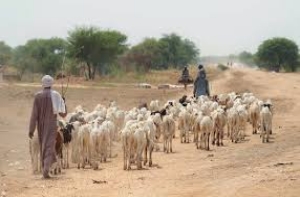
Typology and practices of Sahelian sheep herders in the context of mobility and climate variability in Chad
Abstract
In Chad, sheep herders rely on forage resources whose seasonality and productivity are closely linked to the climate. Herd mobility and climate change determine the survival and productivity of sheep. This study aims to characterize lifestyles and practices that are resilient to the effects of unpredictable environmental changes. To this end, a survey was conducted among 242 transhumant herders in eleven camps in the Chari region. Multiple Correspondence Analysis (MCA) identified three groups of herders. Group 1 comprises 43% of the herders: the camp leader decides on their mobility for transhumance. Group 2 comprises 4.5%: the nuclear family decides on their mobility; and Group 3 accounts for 52.5%: the herder decides on his or her own mobility. The herders’ practices rely on careful management of mobility and natural resources, combined with supplemental feeding, to adapt to the environment. It is clear that a national climate risk program is essential for designing targeted adaptation and mitigation strategies.
Keywords: climate, sheep, herder characteristics, supplemental feeding, transhumance, Chad