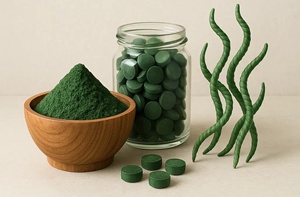
Physicochemical and phytochemical characterization of the aqueous extract of spirulina
Abstract
Spirulina is a blue-green microalga widely consumed as a food supplement because of its high nutritional value and its content of bioactive compounds. This study aimed to characterize the physicochemical composition of a commercial spirulina powder and the phytochemical profile of its aqueous extract (EASP). The extract was prepared by aqueous maceration (5 g/50 mL, 24 h), centrifuged, filtered, and freeze-dried. Moisture, dry matter, mineral and organic matter were determined according to AOAC methods, secondary metabolites were screened using qualitative tests, and the main constituents were quantified by spectrophotometric and gravimetric methods. The powder contained 8.40% moisture, 91.6% dry matter, 7.67% mineral matter and 92.3% organic matter. Qualitative screening revealed abundant saponins, moderate amounts of tannins and terpenoids, low amounts of alkaloids, and no steroids or phlobatannins. Quantitative analysis showed high contents of proteins (61.5 %), C-phycocyanin (12.5 %), total sugars (15.4 %) and lipids (7.31 %), together with total polyphenols (4.28 mg GAE/g DM), flavonoids (1.7 mg QE/g DM), condensed tannins (0.2 mg CE/g DM), total fibers (2.69 %), chlorophyll a (2.62 mg/g DM), chlorophyll b (0.48 mg/g DM) and carotenoids (3.27 mg/g DM). These findings indicate that the aqueous extract of spirulina is a protein- and pigment-rich matrix with a noticeable phenolic content, supporting its use as a nutritional and nutraceutical ingredient.
Keywords: Spirulina, Aqueous extract, Phytochemical screening, C-phycocyanin, Phenolic compounds, Proteins, Pigments