Abstract
The increasing prevalence of antibiotic-resistant bacteria in aquaculture systems has become a major concern due to its implications for fish health, ecological sustainability, and public health. This study examined the intestinal bacteria of cultured African catfish (Clarias gariepinus) and evaluated the isolates' susceptibility to tetracycline and amoxicillin. A total of nine (9) fish samples were randomly obtained from three (3) fish farms within Katsina metropolis, Nigeria. Intestinal contents of the fish were aseptically collected, and the bacterial isolates observed were identified using colony morphology, Gram staining, and standard biochemical tests. Antibiotic susceptibility testing was conducted using the Kirby–Bauer disk diffusion technique in accordance with Clinical and Laboratory Standards Institute (CLSI) guidelines. Eleven (11) bacterial isolates were identified, including Escherichia coli, Pseudomonas aeruginosa, Klebsiella pneumoniae, Acinetobacter baumannii, and Proteus mirabilis. A significant number of the isolates exhibited resistance to amoxicillin, whereas higher levels of susceptibility were observed for tetracycline.
Keywords: Clarias gariepinus, intestinal bacteria, antibiotic resistance, tetracycline, amoxicillin, aquaculture
INTRODUCTION
Aquaculture is one of the leading food production sectors worldwide, playing a significant role in global food security, especially in developing countries, Nigeria inclusive (FAO, 2020). African catfish (Clarias gariepinus) is among the most widely cultured fish species in Nigeria because of its rapid growth, high tolerance to high stocking densities, and high consumer demand (Oladimeji et al., 2018). In spite of all advantages, bacterial diseases pose a significant challenge in catfish production, thus resulting in reduced productivity and overall economic loss for the farmers (Austin and Austin, 2016). The gastrointestinal tract of fish harbors different bacterial communities, some of which can become opportunistic pathogens under stressful environmental situations. Tetracycline and amoxicillin antibiotics are often used in aquaculture to control bacterial infections (Lunestad and Samuelsen, 2014). Consequently, the misuse and abuse of these antibiotics greatly contributed to the emergence and spread of antibiotic-resistant bacteria in freshwater environments (Yuan et al., 2023). Resistant bacterial strains within aquaculture systems can pose public health risks via food chain and environmental interactions (Baran et al., 2023). Understanding the dynamics of antibiotic susceptibility of bacteria associated with cultured fish is essential for effective bacterial disease management. However, there are limited studies on antibiotic resistance patterns of intestinal bacteria in cultured catfish (Clarias gariepinus) in Katsina metropolis. This study aimed to isolate and identify intestinal bacteria from cultured catfish (Clarias gariepinus) in Katsina metropolis and to assess their susceptibility to tetracycline and amoxicillin.
MATERIALS AND METHODS
Study Area
The study was conducted in Katsina metropolis, Katsina State, Nigeria, located between latitudes 11°08′N and 13°22′N and longitudes 6°52′E and 9°20′E. The area lies within the Sudan savannah biome. The region supports small and medium-scale aquaculture businesses (Ladan, 2019).
Sample Collection
Nine (9) apparently healthy African catfish (Clarias gariepinus) were randomly collected from three fish farms within Katsina metropolis, with three fish obtained from each farm. The samples are limited to nine due to few numbers of aquaculture operational farms within Katsina Metropolis. The fish samples were transported in sterile containers containing pond water to the microbiology laboratory at Aminu Kano Teaching Hospital, Kano State, for bacteriological examination.
Isolation of Intestinal Bacteria
Fish were aseptically dissected, and intestinal samples were collected using sterile instruments. Six-fold serial dilutions were carried out from 10-1 to 10-6, and 10-4, 10-5, and 10-6 were selected for incubation. The intestinal contents were discarded onto nutrient agar plates and incubated for 18–24 hours at 37 °C. The intestinal contents of each fish were kept in a sterile container and labeled: A1, A2, A3, A4, A5, A6, A7, A8, and A9. Distinct colonies were sub-cultured repeatedly in order to obtain pure bacterial isolates.
Identification of bacterial isolates
Bacterial isolates were identified using standard microbiological techniques, which are based on colony morphology, Gram staining, and biochemical tests, including oxidase, catalase, citrate, urease, and triple sugar iron (TSI) tests in line with the established protocols. Identification was limited to phenotypic and biochemical characteristics; all the identification procedures were done according to Cheesbrough (2000).
Antibiotic Susceptibility Testing
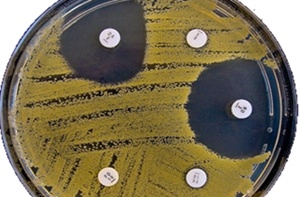
Antibiotic susceptibility testing was carried out using the Kirby–Bauer disk diffusion method on Mueller–Hinton agar in accordance with CLSI (2024) guidelines. Bacterial suspensions were standardized to a 0.5 McFarland standard (approximately 1.5 × 10⁸ CFU/mL). Tetracycline (30 µg) and amoxicillin (10 µg) discs were applied, and plates were incubated for 18–24 hours at 37 °C. Zones of inhibition were measured and interpreted as susceptible, intermediate, or resistant. The zones of clearance were measured using a plate ruler. The isolates were defined as Susceptible (S), Intermediate (I), or Resistant (R), Amoxicillin ≥ 17 mm susceptible, 14- 15 mm intermediate, ≤ 13 mm resistant; Tetracycline ≥ 15 mm susceptible, 12- 14 mm intermediate, ≤ 11 mm resistant, according to (CLSl, 2024).
RESULTS AND DISCUSSION
Biochemical Characteristics of Bacterial Isolates
The predominance of Gram-negative bacilli observed in this study showed the established microbial profile of aquaculture systems (Table 1). This finding was in agreement with that of Njoku et al. (2015); Niyi-David et al. (2021); Onwujekwe et al. (2025). However, beyond confirming existing findings, the microbes identified indicated poor environmental and management-related issues in the study area. The recovery of the lactose and non-lactose-fermenting bacteria on MacConkey agar provides further insight into the sanitation condition of the system. The detection of lactose-fermenting enteric bacteria such as Escherichia coli and Klebsiella spp. is a strong indication of faecal contamination, because these microbes serve as indicators of poor sanitary quality in an aquaculture environment (Njoku et al., 2015; Niyi-David et al., 2021). Furthermore, the presence of these identified bacteria reasonably indicates a shortfall in hygiene practices and possible contamination of pond water, which might affect fish safety and fish product quality (Onwujekwe et al., 2025). This might pose a direct risk of foodborne illness to consumers. The isolation of Pseudomonas aeruginosa further reinforces the environmental nature of the microbial community, at the same time indicating possible post-harvest risks. P. aeruginosa is well documented in aquaculture systems and is known to be associated with fish spoilage due to extracellular enzymes (proteases and lipases) production by the bacteria, as reported by Niyi-David et al. (2021) and Njoku et al., 2015). The presence of P. aeruginosa in this study suggests an elevated risk of rapid fish deterioration, which may reduce shelf life, compromise product quality, and result in economic losses if appropriate handling and preservation measures are not in place.
Equally, the identification of Proteus mirabilis, characterized by urease activity and hydrogen sulphide production, might be due to the presence of decomposing organic matter within the pond. Previous studies have attributed Proteus spp. to poorly managed aquaculture environments where organic waste accumulated (Njoku et al., 2015; Niyi-David et al., 2021). This finding therefore serves as a clear indicator of inadequate pond sanitation and sub-optimal waste management practices. This condition may create a favourable environment for opportunistic pathogens, which might potentially increase the risk of fish disease outbreaks, increase fish mortality, and reduce overall productivity. Similarly, the detection of Acinetobacter spp., although less frequently reported in aquaculture when compared to Enterobacteriaceae and Pseudomonas, indicates the increasing microbial diversity of pond ecosystems. Even though this study used biochemical characterisation, not molecular characterisation, the occurrence of this genus is of significant importance due to its emerging clinical relevance and documented findings indicating its antimicrobial resistance. The presence of this microbe in the aquaculture environment raised concerns about the potential transmission of resistant bacteria via direct human contact or the food chain. This evidence showed the need for an improved aquaculture monitoring strategy.
However, the bacterial species observed, including E. coli, Klebsiella spp., Pseudomonas aeruginosa, Proteus mirabilis, and other Gram-negative isolates, were consistent with the species commonly encountered in aquaculture systems (Njoku et al., 2015; Niyi-David et al., 2021; Onwujekwe et al., 2025). The frequent occurrence suggests underlying deficiencies in hygiene, water quality, and general pond management. Therefore, these findings call for the critical need for improved sanitation practices, strict biosecurity measures, and routine microbial surveillance. Failure to implement previously highlighted interventions might accelerate fish spoilage, potential antimicrobial resistance strains, as well as opportunistic infections, which are threatening public health and the sustainability of aquaculture operations.
Antimicrobial Susceptibility
The antimicrobial susceptibility profile in Table 2 revealed all the bacterial isolates identified, including Pseudomonas aeruginosa, Escherichia coli, Klebsiella pneumoniae, Citrobacter freundii, and Acinetobacter baumannii, which showed 100% resistance to amoxicillin. This finding evidently showed the ineffectiveness of amoxicillin against Gram-negative bacteria in the studied aquaculture environment. The continued use of amoxicillin for therapeutic purposes in fish farming in Katsina State could lead to the emergence of new microbial strains and economic losses. This opinion was consistent with that of Cabello et al. (2013), who suggested that the extensive and often over-use of antibiotics in aquaculture promotes the selection of resistant bacterial strains, especially against β-lactam antibiotics like amoxicillin. However, Done et al. (2015) noted that aquaculture systems sometimes act as reservoirs of antibiotic-resistant bacteria as a result of continuous antimicrobial exposure, thus reducing the clinical effectiveness of commonly used drugs.
The complete resistance observed in Pseudomonas aeruginosa further supports its well-documented intrinsic resistance mechanisms, including low outer membrane permeability and active efflux systems (Lupo et al., 2012), indicating that infections caused by this organism may be particularly difficult to manage in aquaculture systems and may require alternative or combination therapies. This was in agreement with previous reports that identified P. aeruginosa as a major contributor to multidrug resistance in aquatic environments, thereby posing significant risk to both fish health and public health.
In contrast, the isolates demonstrated high susceptibility to tetracycline, with most organisms showing 100% susceptibility, while P. aeruginosa demonstrated 87.5% susceptibility with slight resistance (12.5%). This suggests that tetracycline remains relatively effective against the bacterial isolates in the study area, evidently indicating it as a good option for managing bacterial infections in aquaculture. This finding aligns with Miranda et al. (2018), who identified the effectiveness of tetracycline in some aquaculture systems where its use is controlled.
The slight resistance observed in P. aeruginosa indicates the potential emergence of tetracycline resistance, indicating that indiscriminate use of this antibiotic could lead to a gradual decline in its effectiveness. Findings by Done et al. (2015) also highlighted antibiotic resistance in aquaculture environments developing rapidly due to horizontal gene transfer and environmental accumulation of antimicrobial residues. Though tetracycline appears effective in this study, its sustainability as a treatment option depends on strict regulation of usage.
The variation observed between high susceptibility and other findings of increasing tetracycline resistance in various aquaculture environments might be attributed to antibiotic usage variation, farm management practices, and environmental conditions. It also implies that the relatively low resistance in the present study area could be due to limited antibiotic pressure or better management practices. This finding was in agreement with Cabello et al. (2013), who emphasized that resistance development is strongly influenced by the intensity and frequency of antibiotic use in aquaculture systems. Conclusively, the findings of this study demonstrate a clear resistance to commonly used β-lactam antibiotics and retained susceptibility to tetracycline. There is an urgent need for antibiotic stewardship, routine susceptibility testing, and exploration of alternative treatments such as plant-based antimicrobials to mitigate resistance and ensure sustainable aquaculture operations.
CONCLUSION
The findings of this study show that the intestinal bacteria associated with cultured Clarias gariepinus in Katsina metropolis are largely dominated by Gram-negative species such as Escherichia coli, Pseudomonas aeruginosa, Klebsiella pneumoniae, Acinetobacter baumannii, and Proteus mirabilis. The presence of these bacteria, especially those linked to faecal contamination and opportunistic infections, indicated the underlying environmental and sanitary issues within the aquaculture systems, including possible poor hygiene and accumulation of organic waste. The antibiotic susceptibility further revealed that all the bacterial isolates were completely resistant to amoxicillin, suggesting that this drug may no longer be effective for managing bacterial infections in the studied environment. On the other hand, most of the isolates remained highly susceptible to tetracycline, although the slight resistance observed in Pseudomonas aeruginosa might have indicated reduced effectiveness. In general, these results suggest that while tetracycline still shows promise as a treatment option, the presence of widespread resistance to amoxicillin is of great concern. This suggests the importance of improving pond management practices and ensuring the careful and controlled use of antibiotics to protect fish health and preserve the effectiveness of available treatments.
REFERENCES
Baran A., Kwiatkowska A., Potocki L. (2023). Antibiotics and bacterial resistance: a short story of an endless arms race. Int. J. Mol. Sci., 24:1234–50.
Cabello F.C., Godfrey H.P., Buschmann A.H., Dölz H.J. (2013). Aquaculture as yet another environmental gateway to the development and globalization of antimicrobial resistance. The Lancet Infectious Diseases, 13: 835–843.
Cheesbrough M. (2000). Fungal pathogens District laboratory practice in Microbiology. Cambridge University press. p231-301.
CLSI (2024). Methods for Dilution Antimicrobial Susceptibility Tests for Bacteria That Grow Aerobically (CLSI M07). Clinical and Laboratory Standards Institute.
Done H.Y., Venkatesan A.K., Halden R.U. (2015). Does the recent growth of aquaculture create antibiotic resistance threats different from those associated with land animal production? The AAPS Journal, 17: 513–524.
Ladan S.I (2019). Analysis of contemporary insecurity in Katsina State, Nigeria. Direct Research Journal of Social Science and Educational Studies, 6: 95-102.
Lupo A., Coyne S., Berendonk T.U. (2012). Origin and evolution of antibiotic resistance: The common mechanisms of emergence and spread in water bodies. Frontiers in Microbiology, 3: 18.
Miranda C.D., Godoy F.A., Lee M.R. (2018). Current status of the use of antibiotics and antimicrobial resistance in the Chilean salmon farms. Frontiers in Microbiology, 9: 1284.
Niyi-David C.C., Wemedo S.A., Akani N.P., Douglas S.I. (2021). Culture-based characterization of bacteria associated with fish pond wastewater undergoing treatment using plants. Journal of Advances in Microbiology, 21: 1–10.
Njoku O.E., Agwa O.K., Ibiene A.A. (2015). Antibiotic susceptibility profile of bacterial isolates from some fishponds in Niger Delta Region of Nigeria. Microbiology Research Journal International, 7: 167–173.
Onwujekwe E.C., Onyia F.C., Onovo A.E., Ani V.C. (2025). Bacteriological quality of pond water used in aquaculture in Enugu State, Nigeria. Applied Microbiology: Theory & Technology, 6: 33-43.
Yuan X., Lv Z., Zhang Z., Han Y., Liu Z., Zhang H. (2023). A review of antibiotics, antibiotic-resistant bacteria, and resistance genes in aquaculture: occurrence, contamination, and transmission. Toxics, 11: 420– 35.