Ethnopharmacological survey on the traditional use of myrtle (Myrtus communis) in Northwestern Tunisia
Abstract
Situated at the intersection of human and natural sciences, ethnopharmacology focuses on traditional knowledge and its potential for discovering new therapeutic agents. In this context, we conducted an ethnopharmacological survey on the traditional use of myrtle (Myrtus communis) in the Aïn Draham region (North-West Tunisia) to examine the population’s knowledge regarding its medicinal applications. A structured questionnaire with two sections was used: the first covering the demographic profile of participants (age, sex, education level), and the second focusing on the identification and uses of myrtle (parts used, treated ailments, preparation methods, and routes of administration). The data collected revealed that myrtle is widely used as a traditional remedy for various conditions, mainly digestive disorders (50%) and respiratory ailments such as flu and sore throat (34%). The most common preparation methods were maceration (40%), essential oil use (30%), and decoction (15%), while oral administration was the predominant route (90%). According to participants, the leaves were the most frequently used part (55%), followed by fruits and flowers. In conclusion, the information obtained from the inhabitants of Aïn Draham highlights the ethnomedicinal importance of Myrtus communis and provides a valuable foundation for future phytochemical and pharmacological studies aimed at exploring its therapeutic potential.
Keywords: Ethnopharmacology, Traditional medicine, Myrtle, Survey, Tunisia
INTRODUCTION
Medicinal plants have long constituted an essential therapeutic resource for many populations, particularly in rural regions where traditional medicine remains the primary form of healthcare[1, 2]. In Tunisia, the richness of aromatic and medicinal flora has fostered the development of ethnopharmacological practices deeply rooted in local culture and transmitted across generations[3, 4]. Among the most used species is Myrtus communis L., an aromatic plant belonging to the Myrtaceae family, widely distributed throughout the Mediterranean basin and particularly abundant in the forested areas of northern Tunisia[5, 6].
Myrtus communis is known for its numerous biological properties, notably antimicrobial, antioxidant, anti-inflammatory, and antidiarrheal activities, which have been extensively documented in scientific literature[7, 8]. The leaves, fruits, and essential oil of myrtle are traditionally used to treat various ailments, such as digestive disorders, respiratory infections, dermatological diseases, and certain metabolic pathologies[9, 10]. Despite this growing interest, traditional knowledge related to the use of myrtle in Tunisia remains underexplored and insufficiently valorized, highlighting the need for thorough documentation to preserve this heritage and to confront it with modern scientific data.
The Aïn Draham region, located in northwestern Tunisia, is characterized by rich biodiversity and a humid climate that favors the proliferation of Myrtus communis. This forested area also represents a valuable reservoir of popular knowledge concerning the therapeutic use of plants. In this context, the present ethnopharmacological study aims to document the traditional uses of myrtle among a local population selected for its expertise and experience in medicinal plants. The survey identifies the plant parts used, methods of preparation, routes of administration, and treated pathologies, thereby contributing to a better understanding of ethnobotanical knowledge and its value for future research perspectives.
MATERIAL AND METHODS
Choice of region
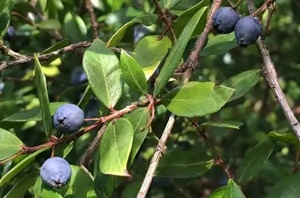
We selected the Aïn Draham region, located in northwestern Tunisia, due to its humid climate and dense vegetation, which promote a natural abundance of myrtle (Myrtus communis L.) (Figure 1). This region is particularly renowned for its biodiversity and forest ecosystem, offering an ideal setting for the ethnopharmacological study of this plant with its many traditional uses.
Survey Design
The survey questionnaire is structured in two sections. The first section focuses on the sociodemographic information of the participants, including sex, age, and education level. The second section explores the identification and uses of the plant, examining preparation methods, administration techniques, and the pathologies treated. This approach allows for the collection of essential data to better understand the medicinal properties of Myrtus communis and its health benefits.
Data Collection
To conduct our survey, we designed 100 questionnaires. First, we introduced ourselves using a badge containing the necessary information about the interviewer’s identity. Next, we explained the objectives of the study to build trust with the interviewees. To ensure the reliability of the survey, we selected interviewees based on their knowledge of the plant, particularly its traditional medicinal uses. For this purpose, we chose to interview elderly people, mothers, and farmers. Interviews took place in people’s homes, as well as at weekly markets and souks. Active listening allowed us to obtain additional information, some of which we found interesting, some less so. However, to avoid discouraging the interviewees, we took all the information into account. As soon as the conversation began, we started filling out the questionnaire.
Problems encountered during the survey
Difficulties arose in collecting information about myrtle from herbalists, who wish to protect the secrets of their trade. Furthermore, it was difficult to contact mothers, who were often busy with their daily tasks.
Data processing
Questionnaire preparation and data entry were carried out using Sphinx software, while results processing was analyzed using Excel.
RESULTS
Ethnopharmacological Survey
The questionnaire conducted in the Aïn Draham region revealed that myrtle (Myrtus Communis L) is widely used in traditional medicine to treat various pathologies.
Distribution of respondents by sex
Most respondents were male (58%), compared to 42% female, as illustrated in Figure 2.
Distribution of respondents by age group
Most respondents were between 50 and 70 years old (42%), and between 30 and 50 years old (40%). It should be noted that the extreme ages ranged from 20 to 90 years, as illustrated in Figure 3.
Education Level
Among the surveyed population, 30% were university graduates, while the remaining 20% were divided between primary (10%) and secondary (10%) education levels. Most respondents (50%) were illiterate, as illustrated in Figure 4.
The parts used
According to those surveyed, the most used part of the myrtle is the leaves (55%), followed by the fruit (30%) and the flowers (15%). In contrast, the stem and roots are not used at all, as illustrated in Figure 5.
Preparation Methods
According to the survey results, methods of using myrtle vary according to the respondents’ habits. Maceration is the most common, used by 40% of respondents, followed by the use of essential oil (30%) and decoction (15%). Infusion is less widespread (10%), while 5% of respondents mentioned other methods of use (Figure 6).
Method of administration
Generally, the preparation is taken orally (90%). Topical applications (7%) are preferred for treating skin conditions, wounds, inflammation, and muscle pain. Other methods of administration, such as gargling and inhalation (3%), are preferred for treating certain respiratory illnesses (Figure 7).
Traditional and Medicinal Uses of Myrtle
The survey showed that myrtle leaves are primarily used to treat digestive ailments, mentioned by 50% of respondents. Their use to treat influenza and sore throats is also common, accounting for 34% of responses. In addition, 10% of respondents used them to treat diabetes, while other applications, notably as an aphrodisiac (1%), although marginal, appear promising. Finally, 5% of participants indicated other miscellaneous uses for the plant (Figure 8).
Reasons for using herbal medicine
Most respondents (41%) indicated they used myrtle because of its low cost. Others highlighted its effectiveness (33%), while 21% stated that it was preferable to modern medicine. Finally, 5% mentioned the unavailability of medications as a reason for their choice (Figure 9).
Level of satisfaction
Figure 10 shows that most respondents reported being satisfied (70), followed by those who were very satisfied (18) and those who were somewhat satisfied (12), while none reported being disappointed (0). This illustrates an overall positive assessment.
DISCUSSION
In this study, we analyzed the baseline information collected from the surveyed population, including sex, age, family knowledge, educational level, and profession, as well as their knowledge of the studied plant. These data are presented as percentage-based graphs to facilitate comparison and interpretation of the results.
In the study area of Aïn Draham, Tunisia, traditional medicine involving the use of myrtle is practiced by both sexes. However, men are slightly more represented, with a rate of 58% compared to 48% for women. These findings are comparable to those reported by Idres and Bourai 2021[11] in the Tizi Ouzou region of Algeria. The survey revealed a predominance of traditional use of myrtle in the treatment of digestive disorders. Indeed, most respondents reported using the leaves of this plant to treat various digestive ailments, such as abdominal pain, diarrhea, and gastric ulcers. These observations are consistent with several previous studies that have highlighted the gastroprotective properties of Myrtus communis L.[12, 13]. The effectiveness of this plant in this context may be attributed to the presence of bioactive compounds such as flavonoids and tannins, which are known for their anti-inflammatory and antioxidant effects[14, 15].
However, the use of myrtle in the field of male fertility appears to be much more marginal. Only 1% of respondents reported a traditional use of this plant for this purpose. This low prevalence may be explained by limited transmission of knowledge regarding this specific effect, as well as by the lack of clear scientific recognition of its effects on male reproduction. Nevertheless, some recent studies have begun to explore this potential. For example, research has shown that the aqueous extract of Myrtus communis L. exhibits significant antioxidant activity, which may play a protective role against oxidative stress induced by various environmental toxicants, including bisphenol A, an endocrine disruptor known to impair male fertility[16]. In addition, the aqueous extract is more commonly used than the essential oil, although several studies have demonstrated that the latter possesses strong antioxidant capacity[17] and beneficial effects in various diseases[10].
The high frequency of maceration (40%) and essential oil use (30%) also reflects common practices in North African traditional phytotherapy. These preparation methods enable the extraction of bioactive compounds such as myrtenol, 1,8-cineole, and limonene, which are widely recognized for their beneficial effects on respiratory[18] and digestive disorders[19]. The predominance of the oral route of administration (90%) further indicates the intention to achieve a systemic effect, which is consistent with the most frequently cited therapeutic indications by participants[20].
Finally, the main motivation reported by participants was the low cost of myrtle-based remedies (41%), highlighting an important socioeconomic aspect. In rural areas, the availability of medicinal plants, combined with limited financial resources, encourages the use of phytotherapy as an alternative or complement to modern medicine[2]. The perceived effectiveness reported by 33% of respondents further confirms the population’s trust in this plant, which is a key factor in the transmission and sustainability of traditional knowledge[21].
CONCLUSION
Considering this study, the results obtained largely agree with ethnopharmacological data reported in other regions of the Maghreb and the Mediterranean basin. This confirms the importance of Myrtus communis L. as a versatile medicinal plant and underscores the need to value this traditional knowledge. Documenting these practices constitutes an essential starting point for guiding future phytochemical and pharmacological studies, which could lead to better therapeutic use of myrtle and a more rational integration of this plant into complementary medicine.
REFERENCES
1. Chaachouay, N. (2020). Étude floristique et ethnomédicinale des plantes aromatiques et médicinales dans le Rif (Nord du Maroc). Thèse de Doctorat, Département de Biologie, Université Ibn Tofail-Kénitra, Maroc.
2. Karunamoorthi K., Jegajeevanram K., Vijayalakshmi J., Mengistie E. (2013). Traditional medicinal plants: a source of phytotherapeutic modality in resource-constrained health care settings. Journal of Evidence-Based Complementary and Alternative Medicine, 18: 67-74.
3. Neffati M., M. Sghaier (2014). Développement et valorisation des plantes aromatiques et médicinales (PAM) au niveau des zones désertiques de la région MENA (Algérie, Egypte, Jordanie, Maroc et Tunisie). Observatoire du Sahara et du Sahel: 2014.
4. Najjaa H., Arfa A.B., Máthé Á., Neffati M. (2017). Aromatic and medicinal plants of Tunisian arid and desert zone used in traditional medicine, for drug discovery and biotechnological applications. In Medicinal and Aromatic Plants of the World-Africa, Volume 3 (pp. 157-230). Dordrecht: Springer Netherlands.
5. Aabdousse, J. (2021). Étude ethnobotanique, écologique, morphologique et chimique des populations naturelles du myrte (Myrtus communis L.) au Maroc. Thèse de Doctorat, Faculté des Sciences et des Techniques, Béni Mellal, Maroc.
6. Bouzabata A., Casanova J., Bighelli A., Cavaleiro C., Salgueiro L., Tomi F. (2016). The genus Myrtus L. in Algeria: composition and biological aspects of essential oils from M. communis and M. nivellei: a review. Chemistry and Biodiversity, 13: 672-680.
7. Brahmia A., Chenichene A., Kehili Z. (2017). Étude phytochimique et l’évaluation de l’activité anti-inflammatoire in vitro de certains extraits d’une plante médicinale: Myrtus communis L.. Mémoire de Master, Université 8 Mai 1945 Guelma, Algérie.
8. Amouri S., H. Djaoui, Y. Kerroud (2020). Recherche sur l’effet des molécules bioactives de la plante Myrtus communis L. contre la toxicité cardiaque de la doxorubicine. Université de jijel, Algérie.
9. Hennia A. (2016). Extraction et étude de l’activité biologique des huiles essentielles du Myrte (Myrtus communis L.). Université de Mostaganem, Algérie.
10. Giampieri F., D. Cianciosi, T.Y. Forbes‐Hernández (2020). Myrtle (Myrtus communis L.) berries, seeds, leaves, and essential oils: New undiscovered sources of natural compounds with promising health benefits. Food Frontiers, 1: 276-295.
11. Idres K., N. Bourai (2021). Contribution à l’étude ethnobotanique de la plante médicinale Myrtus communisL. dans les dairas d’Azeffoun et Tigzirt (Wilaya de Tizi-Ouzou). Université Mouloud Mammeri.
12. Sisay M., E. Engidawork, W. Shibeshi (2017). Evaluation of the antidiarrheal activity of the leaf extracts of Myrtus communis Linn (Myrtaceae) in mice model. BMC complementary and alternative medicine, 17: 103.
13. Benchikh, F., Pharmacological effects of Myrtus communis L. on the gastrointestinal tract of rats and mice. . Doctoral dissertation), University Ferhat Abbas de Sétif, Algeria.
14. Rossi A., Di Paola R., Mazzon E., Genovese T., Caminiti R., Bramanti P., Cuzzocrea S. (2009). Myrtucommulone from Myrtus communis exhibits potent anti-inflammatory effectiveness in vivo. The journal of pharmacology and experimental therapeutics, 329: 76-86.
15. Medda S., Fadda A., Dessena L., Mulas M. (2021). Quantification of total phenols, tannins, anthocyanins content in Myrtus communis L. and antioxidant activity evaluation in function of plant development stages and altitude of origin site. Agronomy, 11: 1059.
16. Mustafaoğlu F.K., Ertaş B., Şen A., Akakın D., Şener G., Ercan F. (2022). Myrtus communis L. extract ameliorates high fat diet induced kidney and bladder damage by inhibiting oxidative stress and inflammation. European journal of biology, 81: 217-230.
17. Aleksic V., P. Knezevic (2014). Antimicrobial and antioxidative activity of extracts and essential oils of Myrtus communis L. Microbiological research, 169: 240-254.
18. Liu J., Liu X., Xiong X., Zheng Y., Rao R., Li W. (2025). Protective effect of 1, 8-cineole (eucalyptol) on respiratory system: A systematic review and meta-analysis from animal studies. Pharmacognosy Magazine, 21: 1220-1230.
19. Shiekh R.A.E., Atwa A.M., Elgindy A.M., Mustafa A.M., Senna M.M., Alkabbani M.A., Ibrahim K.M. (2025). Therapeutic applications of eucalyptus essential oils. Inflammopharmacology, 33: 163-182.
20. Anzabi R.M., Davodpour A.H., Ghodratizadeh S., Nikeghbal D., Sadeghzade A., Mohammadikhah M., Rostamzadeh S. (2025). Recent knowledge on squamous cell carcinoma of the oral cavity: Contributing factors, underlying molecular pathways, and current attitudes in the therapeutic approaches. International Journal of Molecular and Cellular Medicine, 14: 928.
21. Laurendeau G. (2011). Usages des plantes par les Pekuakamiulnuatsh: étude sur la transmission des savoirs dans la communauté ilnu de Mashteuiatsh. Mémoire de maîtrise, Université de Laval, Canada.