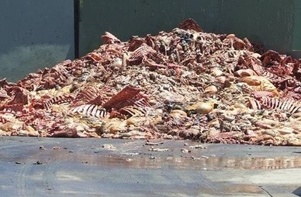
Quantitative assessment of economic valorization of slaughterhouse waste in pastoral areas of Niger
Abstract
Meat production generates substantial slaughterhouse waste that, if poorly managed, poses environmental and health risks while representing a loss of potentially valuable resources. This study assessed the economic valorization potential of slaughterhouse waste at Tahoua abattoir (Niger). Major by-products - blood, gastrointestinal content, horns, hooves, bile, and cranial bones - were weighed in 30 cattle, 20 camels, 100 sheep, and 100 goats, and willingness to pay for their utilization was estimated among 150 potential users. Gastrointestinal content was the largest waste fraction: 23.5 kg in cattle, 35.9 kg in camels, 3.95 kg in sheep, and 1.0 kg in goats, followed by blood. Age significantly influenced gastrointestinal content in camels. Sex, breed, and category affected certain fractions, particularly gastrointestinal content and horn structures, while other fractions showed minor variations. Economic analysis indicated that only use as fertilizer elicited a positive willingness to pay. These results provide a basis for optimizing the valorization of high-value by-products and improving sustainable slaughterhouse waste management.
Keywords: Animal by-products, Preference model, Economic valuation, Urban slaughterhouse, Niger
INTRODUCTION
Meat production inevitably generates large amounts of slaughterhouse waste, including blood, gastrointestinal content, bones, horns, and other animal by-products unfit for human consumption (Omole et Ogbiye, 2013). These residues represent significant organic by-products that can be valorized as fertilizer (Labioui et Cherkaoui, 2009; Letah Nzouebet et al., 2025), soil amendments (Farinet, 2017; Afilal et al., 2019), or, in some cases, as animal feed (Özdemir et Yetilmezsoy, 2020). In many African contexts, waste management systems remain insufficient, with direct discharge into the environment causing soil and water pollution, odor nuisances, and health risks for local populations.
Beyond environmental concerns, the sustainable valorization of slaughterhouse waste represents an opportunity for circular economy practices, enabling the production of value-added resources such as renewable energy (biogas) through anaerobic digestion or organic amendments via composting (Habchi et al., 2024; Ouahabi, 2024). These approaches have been extensively reviewed, highlighting the techniques, economic benefits, and environmental implications of converting slaughterhouse waste into marketable products (Ashilenje et al., 2026).
In Sahelian areas like Niger, where both regulated and unregulated slaughtering are common and often associated with rudimentary by-product management (Montcho et al., 2025; Omole et Ogbiye, 2013; Muyima et al., 2025), quantitative data on waste generation and its economic valorization potential remain limited. However, similar initiatives in West Africa, such as in Senegal, have demonstrated that methanization and composting of solid waste can yield economically viable results while reducing negative environmental impacts (Farinet et Hurvois, 1991; Farinet, 2017).
Within this context, the present study aims to quantitatively assess slaughterhouse waste production in Tahoua (Niger) and to analyze its potential economic valorization through users’ willingness to pay, thereby providing essential data for sustainable integrated management and recommendations to optimize valorization chains in the region.
MATERIALS AND METHODS
Sampling and data collection
This study was conducted at the Tahoua abattoir (Niger) using a sample of 30 cattle, 20 camels, 100 sheep, and 100 goats. This sample represents 15% of large ruminant (cattle and camels) slaughter, 27% of sheep, and 20% of goats.
The quantification of offal components was performed using two pre-calibrated weighing systems. High-mass items were measured with an ACS electronic scale, with a maximum capacity of 40 kg and an accuracy of 200 g. Low-mass items (horns, hooves, bile) were weighed with a precision scale with a maximum capacity of 1 kg and a sensitivity of 10 g. Prior to each data collection session, the proper functioning and accuracy of the scales were verified according to the manufacturer’s recommendations.
Animals were randomly selected in the bleeding hall to minimize selection bias. For each individual, data on the quantity and weight of the waste generated were recorded on a standardized form (Appendix). Recorded parameters included horns, cranial bones, hooves, gastrointestinal content, blood, and bile. Data were collected every two days on a sample consisting of three cattle, one camel, six sheep, and five goats, according to the established sampling plan.
Measurement procedures were adapted to the nature of each waste type. Blood was collected during bleeding in a 20-liter graduated container and weighed immediately to prevent loss from coagulation or evaporation. Gastrointestinal content was collected after evisceration and weighed without delay. Hooves were counted on-site and weighed in the workshop after separation of the distal ends. Horns and cranial bones were counted and weighed individually. Finally, bile was collected during evisceration and weighed directly.
Statistical analyses
An analysis of variance was performed using R software (R Core Team, 2024) to compare the different categories of slaughterhouse waste (blood, gastrointestinal content, horns, hooves, cranial bones, and bile) according to animal species and associated intrinsic characteristics (sex, breed, category, and age). Multiple mean comparisons were conducted using Tukey’s test when differences were significant at the 5% level.
The value chain analysis of slaughterhouse by-products was conducted using the willingness-to-pay (WTP) concept, estimated with R software. This approach is based on microeconomic theory of value, according to which users’ preferences for a good or service can be inferred from the maximum amount they are willing to pay to obtain it. Willingness to pay thus corresponds to the maximum price an individual agrees to pay for a given quantity of a good and serves as a relevant indicator to guide pricing decisions and optimize revenues or margins.
The analysis relies on a random utility model. The total utility Uij that an individual i associates with an alternative j is decomposed into two components: a deterministic part Vij which is observable and depends on the product attributes, and a random component εij, which captures unobserved factors. Formally:
Uij = Vij + Ɛij
The deterministic component is specified as a linear function of the price and the various attributes of the by-products:
Vij = βj+αj(Price) + β1 pharmacy+β2 animal feed+β3 crafts+...+β15 camel,
where β1, β2, β3,…, βn are the coefficients of the attributes.
The willingness to pay (WTP) for a given attribute is then calculated as the ratio between the coefficient of that attribute and the price coefficient, using the formula:
WTP=−βn/α
This expression represents the amount that users are willing to pay to obtain a specific attribute, all else being equal. Therefore, estimating WTP allows identification of the by-products or uses with the highest perceived value and guides economic valorization strategies within the studied value chain.
RESULTS
Slaughterhouse waste production in goats
The analysis of slaughterhouse waste productivity in goats shows that the digestive tract content constitutes the main component of the waste, whereas bile represents only a marginal fraction (Table 1). The other elements (blood, horns, and hooves) occupy an intermediate position with relatively limited variation.
Age appears to be a determining factor, with a progressive increase in the total weight of waste in older animals, a trend particularly marked for the blood fraction. In contrast, horns, hooves, and bile remain only slightly influenced by this factor. The effect of breed is generally weak, with significant differences observed only for digestive tract content, without a notable impact on the overall waste production.
Sex influences overall waste production, with females generating higher quantities of waste than males, mainly due to a greater digestive tract content. Finally, the physiological category confirms this hierarchy, as adult animals produce more waste than younger individuals.
Slaughterhouse waste productivity in sheep
The productivity of slaughterhouse waste in sheep is mainly dominated by the digestive tract content, followed by blood, while horns, hooves, and bile contribute only marginally to the total waste mass (Table 2). Age appears to be the most determining factor, as animals older than 24 months exhibit a significantly higher total waste production, primarily due to a greater digestive tract content. In contrast, the effect of breed remains generally limited, with significant variations observed only for certain specific fractions, particularly hooves. Similarly, physiological categories and sex influence some individual components (blood and hooves), without leading to significant differences in the overall waste production. Therefore, the overall variability in slaughter waste production in sheep is mainly associated with age and the predominant contribution of the digestive tract content.
Slaughterhouse waste productivity in cattle
The analysis of slaughterhouse waste production in cattle indicates that digestive tract content (DTC) is the dominant component of total waste, followed by blood, while horns, bones, hooves, and bile contribute smaller proportions (Table 3). Age significantly affects certain fractions, particularly DTC, horns, and hooves, with higher values observed in animals older than five years, although no significant difference is observed in total waste production. Breed appears as the main source of variability, significantly influencing several components and the total waste weight. In contrast, sex shows no significant effect, while physiological category mainly affects horn weight. Overall, slaughter waste variability in cattle is primarily driven by breed and, to a lesser extent, age.
The analysis of slaughter waste productivity in camels (Table 4) shows that the digestive tract content (DTC) constitutes the dominant component of the total waste weight, followed by blood, whereas hooves, bile, and other by-products (OB) represent relatively small fractions. Age significantly influences the quantity of digestive tract content, with animals older than 10 years showing higher values than those aged between 5 and 10 years. In contrast, no significant differences are observed for the other components. Consequently, although a tendency toward higher total waste production is observed in older camels, this variation remains statistically non-significant. Overall, these results indicate that the variability in slaughter waste production in camels is mainly driven by fluctuations in digestive tract content.
Willingness to pay for slaughterhouse waste attributes
The analysis of willingness to pay (WTP) reveals strong differentiation depending on the uses and types of slaughterhouse by-products (Table 5). Among the outlets studied, only the use of waste as fertilizer shows a positive and statistically significant WTP, indicating a genuine willingness among stakeholders to pay for this form of valorization. In contrast, uses related to pharmaceutical, artisanal, and cosmetic purposes, as well as the valorization of certain specific by-products (digestive tract content, horns, hooves, bile, and cranial bones), exhibit negative and significant WTP values, reflecting low economic value or a lack of interest from users. Uses for animal or human consumption show non-significant results, suggesting an uncertain perception of their economic potential. Furthermore, WTP varies according to animal species: the highest values are observed for cattle and sheep, followed by camels and goats, indicating that willingness to pay is influenced by the economic importance and the volume of waste generated by each species. Overall, the results indicate that slaughterhouse waste valorization is primarily oriented toward its use as organic fertilizer, while other transformation pathways remain economically less attractive.
DISCUSSION
This study highlights a substantial production of slaughterhouse waste in Tahoua, confirming that animal by-products constitute a significant fraction of biomass generated by livestock systems. These findings align with Omole and Ogbiye (2013) and other studies in Africa and Asia, showing that solid and liquid abattoir wastes represent a notable proportion of live weight and a major source of organic biomass (Muyima et al., 2025; Montcho et al., 2025). Al-Gheethi et al. (2023) further emphasize that high organic loads in slaughterhouse waste are a major pollution factor where management systems are inadequate, a situation frequent in developing countries.
Comparative analyses of average waste production in goats, sheep, and cattle reveal substantial inter- and intraspecific variability, dominated by digestive tract content (DTC), the largest mass fraction of non-carcass residues. This predominance of digestive viscera is well documented (Owens et al., 1993; Ferrell et Jenkins, 1998) due to their metabolic function and diet-related variability. Higher values in cattle versus sheep and goats reflect live weight and body size effects, an established allometric relationship (Owens et al., 1993), consistent with observations by Ragasri and Sabumon (2023), Montcho et al. (2025). Recent reviews also stress the need for reliable quantitative data to guide circular economy strategies (Ashilenje et al., 2026; Özdemir et Yetilmezsoy, 2020).
Age significantly affected DTC and total weight, particularly in adult goats and sheep, supporting Greenwood and Thompson (2007) on physiological maturity and organ development. Significant breed differences in cattle (Bororo vs Azawak) and, to a lesser extent, sheep, confirm that genetic variation influences tissue distribution and ancillary component proportions (Prieto et al., 2009; Navajas et al., 2010). Limited sex effects further indicate that sexual dimorphism mainly matters when live weight or body composition differences are pronounced (Owens et al., 1993; Greenwood, 2007).
Environmentally, the large volumes of blood and DTC confirm the high pollutant potential of untreated effluents (Al-Gheethi et al., 2023). In many African contexts, lack of proper treatment is linked to increased health risks (Muyima et al., 2025; Montcho et al., 2025). Anaerobic digestion is a relevant option for energy recovery from organic-rich waste, demonstrating high methanogenic potential, especially with co-digestion (Habchi et al., 2024; Ripoll et al., 2023; Quelal et Hurtado, 2023). Small-scale digesters have proven feasible in West Africa (Afilal et al., 2019; Farinet et Hurvois, 1991; Farinet, 2017), and integrated biogas units can reduce pollution and be economically viable (Sánchez et al., 2023). In the Sahel, digestates improve soil fertility and crop production, corroborating Labioui and Cherkaoui (2009), Letah Nzouebet et al. (2025).
Willingness-to-pay (WTP) results reveal selective economic valuation of by-products. Positive WTP for fertilizer reflects recognition of agronomic value due to nitrogen, phosphorus, and organic matter content (Salemdeeb et al., 2017; Bernstad et la Cour Jansen, 2012). Negative and significant WTP for pharmaceutical, cosmetic, artisanal uses, and some specific by-products (horns, hooves, bile, cranial bones, DTC) reflects low perceived economic attractiveness despite technological potential (Makkar et al., 2014; Lynch et al., 2017). Non-significant WTP for animal feed and human consumption suggests ambivalent perceptions, potentially linked to health and sociocultural factors (Makkar et al., 2014). Positive WTP for goat, sheep, cattle, and camel chains, favoring cattle and sheep, confirms that willingness to pay correlates with by-product volume and economic importance (Wilkinson, 2011; Herrero et al., 2013). Overall, in Sahelian contexts, slaughterhouse waste valorization is oriented toward simple, locally manageable, and immediately profitable uses, while high-value pathways remain constrained by structural, technological, and institutional limitations.
CONCLUSION
This study highlights the quantitative importance and composition of slaughterhouse waste at the Tahoua abattoir for goat, sheep, and cattle species. Overall, the digestive tract content constitutes the main component of the waste, followed by blood, while horns, hooves, bile, and bones represent secondary fractions. The observed variability is mainly associated with biological factors such as age and, in some cases, breed—particularly in cattle—whereas the effects of sex and physiological category remain generally limited on total waste production.
The results regarding willingness to pay indicate that agricultural valorization, particularly as organic fertilizer, is the economically most attractive option for local stakeholders, while other potential uses remain underutilized. These findings underscore the still untapped potential of slaughterhouse waste within a circular economy perspective.
From a public policy standpoint, the implementation of integrated systems for the management and valorization of slaughterhouse waste appears essential to reduce environmental and health risks while creating new economic opportunities. Future research should focus on quantifying waste flows on a larger scale and evaluating the agronomic, energetic, and economic potential of different valorization pathways adapted to Sahelian contexts.
REFERENCES
Afilal M.A., Elasri O., El Farh L., Elaiche H. (2019). Valorization capacity of slaughterhouse waste in biogas by a tarpaulin digester in Dakar, Senegal. Am. J. Environ. Prot., 8: 22–30.
Al-Gheethi A., Ma N.L., Rupani P.F., Sultana N., Yaakob M.A., Radin Maya S.R.M. (2023). Biowastes of slaughterhouses and wet markets: an overview of waste management for disease prevention. Environ. Sci. Pollut. Res. Int., 30: 71780–71793.
Ashilenje D., Ashour F., Barz M., Belandria V., Marrocchi A., Saber M., Sarh B., Trois C., Willenbacher M., Wohlgemuth V. (2026). A literature review of slaughterhouse waste valorisation: techniques, environmental, and economic implications. Resour. Conserv. Recycl., 224: 108571.
Bernstad A., La Cour Jansen J. (2012). Review of comparative LCAs of food waste management systems – current status and potential improvements. Waste. Manag., 32: 2439–2455.
Ferrell C.L., Jenkins T.G. (1998). Body composition and energy utilization by steers of diverse genotypes fed a high-concentrate diet during the finishing period. J. Anim. Sci., 76: 637–646.
Farinet J.L. (2017). Valorisation agro-énergétique des déchets d’abattoir par méthanisation. In: Restauration de la productivité des sols tropicaux et méditerranéens: contribution à l’agroécologie. Montpellier: IRD.
Farinet J.L., Hurvois Y. (1991). Valorisation et épuration des déchets d’abattoir au Sénégal: application à l’abattoir de Thiès (1989–1991). CIRAD-IRAT.
Greenwood P.L., Thompson A.N. (2007). Consequences of maternal nutrition during pregnancy and of fetal growth for productivity in sheep. Recent. Adv. Anim. Nutr. Aust., 16: 147–158.
Habchi S., Pecha J., Šánek L., Karouach F., El Bari H. (2024). Sustainable valorization of slaughterhouse waste through anaerobic digestion: a circular economy perspective. J. Environ. Manage., 366: 121920.
Herrero M., Havlík P., Valin H. (2013). Biomass use, production, feed efficiencies, and greenhouse gas emissions from global livestock systems. Proc. Natl. Acad. Sci. USA, 110: 20888–20893.
Labioui H., Cherkaoui J. (2009). Essais d’application de déchets d’abattoirs traités à des fins agricoles: cas de culture de blé. Technol. Lab., 4(17).
Letah Nzouebet W.A., Djumyom Wafo G.V., Sali M., Kouamé Koffi P., Niwagaba C.B. (2025). Anaerobic digestion technology for the treatment of slaughterhouse wastewater and its fertilizer potential on Zea mays (L.) under tropical conditions. Discover Environ., 3; 161.
Lynch S.A., Mullen A.M., O’Neill E.E., García C.A. (2017). Harnessing the potential of blood proteins as functional ingredients: a review. Bioresour. Technol., 243: 1204–1216.
Makkar H.P.S., Tran G., Heuzé V., Ankers P. (2014). State-of-the-art on use of insects as animal feed. Anim. Feed Sci. Technol., 197: 1–33.
Montcho M., Séidou A.A., Nouri B., Dao A.N.C., Montcho M., Bougouma-Yameogo V. (2025). Assessment and modeling of slaughterhouses waste sustainable management in West African cities: cases of main cities of Benin, Niger and Burkina Faso. Waste. Biomass Valor., 16: 5053–5068.
Muyima H., Biey Makaly E., Lututala Mumpasi B., Ntumba Mukendi J.L., Umba di M’balu J. (2025). Évaluation et gestion des déchets des bétails dans l’abattage public de Masina (République Démocratique du Congo). Rev. Int. Rech. Sci., 3: 4587–4602.
Navajas E.A., Glasbey C.A., McLean K.A., Fisher A.V., Charteris A.J.L., Lambe N.R., Roehe R. (2010). Predicting beef carcass composition using tissue weights of a primal cut assessed by computed tomography. Animal, 4:132–141.
Omole D.O., Ogbiye A.S. (2013). An evaluation of slaughterhouse wastes in South West Nigeria. Am. J. Environ. Prot., 2: 85–89.
Owens F.N., Dubeski P., Hanson C.F. (1993). Factors that alter the growth and development of ruminants. J. Anim. Sci., 71: 3138–3150.
Özdemir S., Yetilmezsoy K. (2020). A mini literature review on sustainable management of poultry abattoir wastes. J. Mater Cycles Waste. Manag., 22: 11–21.
Prieto N., Navajas E.A., Richardson R.I., Ross D.W., Hyslop J.J., Simm G., Roehe R. (2009). Predicting beef carcass composition and quality using ultrasound scanning. Animal, 3: 695–705.
Quelal O.M.Q., Hurtado D.P. (2023). Anaerobic fermentation of slaughterhouse waste—codigestion with wheat straw to determine methane biochemical potential and kinetic analysis. Fermentation, 9: 726.
Ouahabi Y.R. (2024). Traitement et valorisation des déchets de volaille par digestion anaérobie. J. Econ. Circ. Dev. Dur., 3(2).
R Core Team (2024). R: A language and environment for statistical computing. R Foundation for Statistical Computing, Vienna.
Ragasri S., Sabumon P.C. (2023). A critical review on slaughterhouse waste management and framing sustainable practices in managing slaughterhouse waste in India. J. Environ. Manage., 327: 116823.
Ripoll V., Agabo-García C., Solera R. (2023). Anaerobic digestion of slaughterhouse waste in batch and anaerobic sequential batch reactors. Biomass Convers Biorefin., 13: 11457–11468.
Salemdeeb R., Zu Ermgassen E.K.H.J., Kim M.H., Balmford A., Al-Tabbaa A. (2017). Environmental and health impacts of using food waste as animal feed: a comparative analysis of food waste management options. J. Clean Prod., 140: 871–880.
Sánchez Z., Martí-Herrero J., Escalante H., Castro L. (2023). Integration of mesophilic biogas plant in the animal slaughter process under real limitations: techno-economic evaluation of a Colombian bovine slaughterhouse. Waste. Manag., 160: 112–122.
Wilkinson J.M. (2011). Re-defining efficiency of feed use by livestock. Animal, 5: 1014–1022.