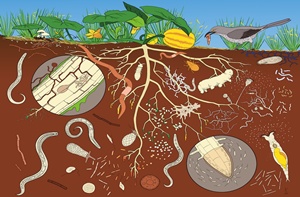
Soil property effects on soil-wildlife ecology
Abstract
Soil constitutes the foundational matrix within which terrestrial wildlife populations develop, interact, and persist, yet the mechanistic linkages between soil properties and wildlife ecology remain inadequately synthesized in ecological theory. This comprehensive review examines the multidimensional relationships between soil physical, chemical, and biological properties and wildlife ecological processes across taxonomic groups and ecosystem types. We systematically evaluate evidence for soil effects on wildlife habitat selection, foraging ecology, reproductive success, population dynamics, disease ecology, and community assembly. Our analysis reveals that soil texture and structure fundamentally constrain burrowing mammal distributions, while soil chemistry modulates plant-nutrient-herbivore trophic cascades with cascading effects on predator communities. Soil microbial communities emerge as critical mediators of wildlife health through immune system priming and pathogen suppression. Climate change and anthropogenic soil degradation are altering these interactions with profound implications for conservation. We identify critical knowledge gaps including limited understanding of soil-wildlife feedback loops, insufficient integration of belowground-aboveground ecology in wildlife management, and inadequate representation of tropical systems in current research. This review establishes soil ecology as an essential frontier in wildlife biology and provides a conceptual framework for integrating pedological and ecological approaches in biodiversity conservation.
Keywords: Belowground ecology, Biogeochemistry, Ecosystem engineering, Habitat quality, Nutrient cycling, Soil fauna, Trophic cascades, Wildlife management
INTRODUCTION
The Soil-Wildlife Nexus
Soil is one of the most biologically active parts of a terrestrial ecosystem. It supports a remarkable diversity of organisms and provides the physical foundation for vegetation, nutrient cycling and many of the resources on which wildlife depends (Orgiazzi et al., 2016; Phillips et al., 2017; Sani et al., 2019). Yet, wildlife studies have often treated soil as background rather than as an active part of habitat. This separation is becoming increasingly difficult to justify because changes in soil condition can affect food supplies, shelter, vegetation and exposure to environmental stress (Wall et al., 2010; Eisenhauer et al., 2017).
The relationship is also not one-way. Animals respond to soil conditions, but they can change those conditions through digging, feeding, trampling, rooting and depositing organic material. The long-standing division between above ground and below ground ecology has therefore obscured part of the way terrestrial ecosystems function (Wardle et al., 2004). Viewing soil as a living and changing component of habitat provides a more useful way of understanding these connections (Jones et al., 1994; Wilkinson, 2018).
In practical terms, soil can influence wildlife in several ways. It can determine whether an animal is able to construct a burrow or nest, regulate the productivity and quality of vegetation, affect the abundance of prey organisms, and shape the survival of pathogens and other biological agents. These pathways may operate separately or reinforce one another, so that a change in one soil property can eventually be reflected in wildlife abundance or behaviour.
Scope and Objectives
This review considers how physical, chemical and biological soil properties influence wildlife, with attention to mammals, birds, reptiles and amphibians. The discussion focuses on habitat selection, feeding, reproduction, population regulation and disease. It also considers situations in which wildlife themselves alter soil conditions.
The main objectives are to: (1) explain the links between individual soil properties and wildlife responses; (2) consider how consistent these relationships are across ecosystems and animal groups; (3) examine feedbacks in which wildlife activity changes soil conditions; (4) discuss the conservation significance of soil change under human pressure and climate change; and (5) identify areas where further research is needed.
PHYSICAL SOIL PROPERTIES AND WILDLIFE ECOLOGY
Soil Texture and Structure
Soil texture, expressed through the relative proportions of sand, silt and clay, is closely tied to the physical suitability of a site for wildlife. For animals that dig, the ease with which soil can be excavated is particularly important. Soil that is too loose may collapse, whereas very heavy soil can require considerable effort to penetrate (Kinlaw, 1999; Reichman and Smith, 1990). For instance, it has been shown that badgers prefer sandy-loam soils that offer a workable compromise between burrow stability and ease of excavation (Thornton et al., 2005). In grassland environments, prairie dogs also exhibit substantial correlations with deep, well-drained soils (Hoogland, 2006).
Texture can also influence wildlife indirectly by affecting the organisms that animals eat. Where high clay contents reduce earthworm abundance, species such as badgers may find less suitable feeding habitat (Kowalczyk et al., 2003). In dry environments, sandy soils can be especially valuable to kangaroo rats because they permit rapid burrowing, seed caching and escape from predators (Valone and Sauter, 2005). In this way, a seemingly simple soil characteristic can affect both shelter and access to food.
Soil structure and compaction are equally important. Compaction reduces pore sizes, space by restricting water movement and root growth, thus weakening the vegetation and forage quality reduction (Hamza and Anderson, 2005; Sani et al., 2019). Additionally, it may render the land unsuitable for animals that require friable soil for digging or nesting. For example, mountain plovers avoid conditions that make nest construction and chick mobility challenging and select open areas with soils good for nest scrapes (Dinsmore et al., 2003; Musa et al., 2025).
Soil Moisture and Hydrology
The amount of water held in soil is one of the clearest environmental cues for many wildlife species. Moisture affects water balance, temperature, plant growth and the availability of soil-dwelling prey.Amphibians are particularly responsive to changes in these environmental conditions, largely because their permeable skin and complex life cycles leave them highly dependent on the availability of moisture. This dependence is especially evident in spadefoot toads, which spend much of their lives underground and rely on sufficiently moist soils to limit water loss and survive periods of environmental dryness. Changes in soil moisture can therefore have consequences beyond their immediate physiological condition, influencing the timing of emergence from underground refuges as well as movements associated with breeding. In this way, variation in soil moisture may act as an important environmental cue that shapes both the behaviour and seasonal activity of amphibian populations (Newman & Dunham, 1994; (Ficetola et al., 2010; Sani et al., 2023 ).
In larger mammals, the relationship with soil moisture is generally indirect, but its ecological significance can be substantial. Soil moisture influences vegetation growth, soil biological activity, and the distribution of food resources, all of which can affect where animals forage and how they use the landscape. This relationship is particularly important in semi-arid environments, where water availability is often a major constraint on both vegetation and wildlife. Small differences in soil moisture can produce noticeable variation in vegetation condition and soil habitat quality, with wetter microsites often remaining productive for longer into the dry season. These areas may also support greater numbers of soil-dwelling invertebrates, providing additional food resources for animals that depend on them.
The distribution of moisture can therefore create patches of relatively favourable habitat within an otherwise dry landscape. During dry periods, African elephants have been observed to move towards areas with greater water availability and better moisture retention, suggesting that the persistence of moisture can influence their use of space when other resources become limited (Smit & Grant, 2009). A similar relationship is evident in wild boar, which may increase rooting activity in moist soils where invertebrate prey are more readily available (Mohr et al., 2021). These examples indicate that animals do not necessarily respond to soil moisture because of the moisture itself. Rather, they respond to the ecological conditions that moisture helps to maintain, particularly the availability of food, vegetation, and suitable foraging sites. In this sense, soil moisture can act as an underlying factor shaping the quality and distribution of wildlife habitat.
The ecological effects of soil moisture also extend to interactions among species, particularly predator–prey relationships. Wet ground can alter the physical conditions experienced by animals, affecting their movement, foraging behaviour, and vulnerability to predators. Such effects may be especially important for small mammals whose activity depends strongly on surface conditions. Kangaroo rats, for example, have been shown to reduce their activity on wet ground, apparently because wetter conditions increase their exposure to visually hunting predators (Brown et al., 1988). In semi-arid ecosystems, where seasonal changes in water availability already place strong constraints on animal behaviour and resource use, these responses may influence when and where animals are active. Soil moisture should therefore be viewed as more than a simple indicator of water content in the soil. Its variation across the landscape can influence vegetation productivity, prey availability, animal movement, habitat selection, and the frequency of predator–prey encounters. Collectively, these processes can contribute to the pronounced spatial variation in wildlife distribution and habitat use that characterises semi-arid ecosystems.
Soil Temperature and Thermal Regimes
Ground-nesting birds must negotiate a delicate balance between gaining sufficient warmth for development and avoiding the risks associated with excessive heat. Although exposed nesting sites can provide favourable temperatures for embryonic development, particularly under cooler conditions, prolonged or intense heating may expose eggs and chicks to considerable thermal stress. Under such circumstances, the characteristics of the ground immediately surrounding a nest can become increasingly important. Amat and Masero (2004), for example, reported that some plover chicks seek shade or move onto wetter substrates when temperatures become high.
Small changes and fluctuations in soil properties such as soil moisture; temperature and the soil vegetation cover can provide wild life animals with an important refuge from extreme heat especially during period of higher or peak temperature; these localised conditions may be of greater consequences as climate changes intensify leading to seasonal fluctuations in temperature patterns and timing of animal activities; while anticipations of early climatic warning signals can cause the animals to be more active in terms of food resources availability before it affect their growth reproduction and ultimate survival (Inouye et al., 2000). In colder and temperate regions, the thawing of permafrost can also modify soil stability and moisture conditions, potentially changing the availability and suitability of sites used by species such as polar bears and Arctic foxes (Fischbach et al., 2007). These responses illustrate how changes in soil and ground conditions can shape wildlife habitat and behaviour alongside the more direct effects of rising temperatures
CHEMICAL SOIL PROPERTIES AND WILDLIFE ECOLOGY
Soil pH and Nutrient Availability
Soil pH and nutrient availability influence wildlife mainly through their effects on vegetation, soil organisms, and food-web processes rather than through direct effects on most animals. Changes in soil acidity, for example, can reduce calcium availability and affect earthworm and snail populations, potentially limiting important food resources for birds and mammals and influencing reproductive performance (Wiemers et al., 2021; Hames et al., 2002; Abdulkadir et al., 2022). Calcium availability is also relevant to eggshell formation and skeletal development, with evidence that some birds and reptiles respond to differences in calcium-rich resources (Tilgar et al., 2002; Horváthová et al., 2011).
Similarly, soil nitrogen and overall fertility can influence plant productivity and forage quality, with consequences for herbivore distribution and predator–prey interactions (Throop & Lerdau, 2004; Holdo et al., 2007). However, these relationships are not necessarily direct or uniform, as water availability, vegetation structure, predation, fire, and other environmental factors can modify wildlife responses. In semi-arid ecosystems, this interaction is particularly important because nutrient availability is closely linked to soil moisture and seasonal vegetation productivity. Thus, soil chemical properties are best understood as part of a soil–plant–invertebrate–vertebrate pathway, through which variation in soil conditions can influence food availability, habitat quality, wildlife distribution, and ecological functioning.
Heavy Metals and Soil Contamination
Heavy metal contamination can affect wildlife through several species-specific exposure pathways, with the nature and severity of the risk depending largely on how individual species use soil, vegetation, water, and prey resources. Metals such as lead (Pb), mercury (Hg), cadmium (Cd), and zinc (Zn) can persist in soil and, where conditions favour their mobilisation, become available to plants and soil organisms. Contaminants may subsequently reach wildlife through ingestion, inhalation, dermal contact, or, most importantly for many species, consumption of contaminated food. Consequently, the same contaminated soil may present very different risks to different animals depending on their feeding behaviour, habitat use, body size, and position within the food web.
Ground-feeding birds and soil-foraging mammals are particularly exposed because their feeding activities bring them into frequent contact with contaminated soil and surface materials. Granivorous birds may ingest contaminated soil particles incidentally while feeding on seeds, whereas insectivorous species can accumulate metals by consuming contaminated earthworms and other soil invertebrates. Small mammals that dig, root, or forage close to the soil surface may experience exposure through both direct soil ingestion and contaminated vegetation or prey. These pathways make soil-associated wildlife especially useful indicators of local contamination because their exposure is closely linked to the chemical condition of the substrate.
Lead provides a clear example of how species behaviour can determine exposure. Hunting ammunition, mining, and industrial activities can introduce lead into soils and surrounding habitats. Scavenging birds, such as vultures and condors, face an additional and particularly important pathway because they may consume carcasses containing fragments of lead ammunition. This route of exposure has contributed to lead poisoning in California condors and illustrates how a contaminant deposited in the environment can be transferred from soil and prey remains to species occupying higher trophic levels (Pain et al., 2009; Finkelstein et al., 2012). The risk is therefore not determined solely by the concentration of lead in soil but also by whether species encounter contaminated material during their normal feeding activities.
Mercury follows a different pathway, particularly in habitats where soil or sediment remains wet for prolonged periods. Under suitable environmental conditions, microorganisms can convert inorganic mercury into methylmercury, which is readily taken up by aquatic organisms and subsequently transferred through food webs. Fish-eating birds and mammals can therefore accumulate substantially higher concentrations than species feeding at lower trophic levels (Scheuhammer et al., 2007). In this case, exposure is strongly influenced by feeding ecology: a piscivorous bird using a contaminated wetland may face considerably greater mercury risk than a terrestrial herbivore occupying the same broader landscape. This species-specific pattern highlights the importance of considering both contaminant behaviour and animal diet when evaluating ecological risk.
Cadmium and zinc may similarly enter wildlife through contaminated plants and soil invertebrates. Herbivores can accumulate these metals through repeated consumption of contaminated vegetation, while insectivorous birds and small mammals may be exposed through contaminated prey. Where exposure is prolonged, elevated metal concentrations can interfere with physiological processes, including growth, immune function, reproduction, and survival (Merrill et al., 2022). However, susceptibility is unlikely to be uniform among species because metal uptake and toxicity are influenced by dietary requirements, metabolic characteristics, age, body condition, and the capacity of individual species to regulate or eliminate particular elements.
Importantly, the presence of heavy metals in soil does not necessarily correspond directly to ecological toxicity. Soil pH, organic matter, texture, moisture, and redox conditions can alter metal mobility and bioavailability, while species-specific behaviour determines the extent to which animals encounter and ingest contaminated material. The ecological pathway can therefore be represented broadly as soil contamination → metal bioavailability → plant/invertebrate uptake → species-specific exposure → physiological response.
Effective assessment should identify which species are most likely to contact contaminated soils, consume contaminated plants or invertebrates, or occupy higher trophic positions where biomagnification may increase exposure. Soil management and wildlife conservation are consequently closely connected: reducing contaminant sources, limiting metal mobility, and monitoring biologically available fractions can reduce exposure while protecting the particular species and feeding guilds most vulnerable to contamination.
Soil Organic Matter and Carbon Cycling
Soil organic matter commonly referred to and abbreviated as (SOM) contributes to soil structure, moisture retention, nutrient supply and active microbial activity, making it an important link between soil condition and wildlife habitat (Noma and Sani, 2008; Sani et al., 2019). Soils with high organic matter contents often support more active soil food webs and higher invertebrate biomass, which can provide additional food for insectivorous wildlife (Sackett et al., 2011). In forest ecosystems, soil carbon has also been associated with bird diversity through its relationship with vegetation structure and arthropod abundance (Muñoz et al., 2015).
The relationship works in the opposite direction as well. Wildlife can contribute to soil carbon and nutrient cycling through dung, carcasses, feeding and movement. Large herbivores can transport and redistribute nutrients over considerable distances, while trampling and vegetation removal can alter the amount of carbon returned to the soil as well as the pore spaces available for moisture availability or otherwise (Schrama et al., 2013; Musa et al., 2025). Elephants are particularly influential because their feeding, movement and dung deposition can modify vegetation and nutrient distribution at landscape scales (Berzaghi et al., 2019;Musa et al., 2023).
BIOLOGICAL SOIL PROPERTIES AND WILDLIFE ECOLOGY
Soil Microbial Communities and Wildlife Health
Soil microorganisms are an important part of the wider biological environment experienced by wildlife. Animals encounter and interact with several soil microbes either directly through contact with the soil or indirectly through food, water and vegetation. Some microbial exposure may contribute to normal immune development, while other organisms are important sources of disease Soil microorganisms are an important part of the wider biological environment experienced by wildlife. Animals encounter soil microbes directly through contact with soil and indirectly through food, water and vegetation. Some microbial exposure may contribute to normal immune development, while other organisms are important sources of disease.
The idea that exposure to a diverse natural microbial community can help regulate immune development has received attention through the hygiene hypothesis (Rook, 2013). The Observations of wild rodents, which shows different inflammatory responses from laboratory animals, provide some support and scientific evidences for the importance of environmental microbial exposure (Abolins et al., 2017). At the same time, soil can harbour pathogens capable of producing serious wildlife disease. Bacillus anthracis spores, for instance, can persist in soil for long periods and contribute to outbreaks among wildlife and livestock (Hugh-Jones & Blackburn, 2009). Yersinia pestis can also persist in environmental reservoirs and form part of disease cycles involving rodents and their predators (Eisen et al., 2007).
Not all soil microbes are harmful. Some soil-derived bacteria can inhibit pathogens affecting amphibians, and this has raised interest in the possible use of beneficial microbes in wildlife disease management (Woodhams et al., 2014; Bletz et al., 2013). Such approaches still require careful ecological assessment before they can be widely applied.
Soil Fauna and Wildlife Food Webs
Soil animals are an important food source for wildlife. Earthworms, beetles and other soil invertebrates provide protein for mammals and birds and help transfer energy from decomposers and plants to higher trophic levels (Boag and Yeates, 1998; Birkhofer et al., 2008). Consequently, any land-use practice that changes soil faunal population and diversity can have effects beyond the soil itself (Musa et al. 2022) .
Compaction and trampling by higher animals, repeated tillage and pesticide use can reduce soil invertebrate populations. A decline in earthworms, for example, may reduce food available to animals that depend on them, while reduction and subsequent declines in arthropods population can affect breeding birds that feed their young on insects (Kowalczyk et al., 2003; Hallmann et al., 2014). These bottom-up effects help explain why soil management can sometimes be reflected in changes in wildlife populations even when the animals themselves are not directly disturbed.
Mycorrhizal Networks and Wildlife Habitat
Mycorrhizal fungi connect soil processes with plant growth and therefore have indirect consequences for wildlife. Arbuscular mycorrhizal fungi(AMF) helps to improve phosphorus uptake and increase plant tolerance to drought, which may in turn help maintain forage and vegetation cover especially under nutrient-poor conditions (van der Heijden et al., 2015). Where these fungal relationships are disrupted and reduced in number, changes in plant diversity and productivity is recorded and can alter habitat for birds and small mammals (Vogelsang et al., 2006).
Fungi can also become part of wildlife diets. Some small mammals and birds feed on fungal fruiting bodies and can disperse fungal spores while doing so, linking animal movement with forest regeneration and mycorrhizal development (Maser et al., 2008). Changes in climate may alter fungal communities, although the consequences for wildlife food webs are still not fully understood (Fernandez et al., 2017).
ECOSYSTEM ENGINEERING AND SOIL-WILDLIFE FEEDBACKS
Wildlife as Soil Engineers
Wildlife do not simply respond to soil conditions; many species actively reshape them. Burrowing mammals mix soil layers, create channels, improve aeration and can change infiltration patterns. Their activities may create small patches producing a localised hotspots with different nutrient and moisture conditions from the surrounding landscape (Eldridge and James, 2009). Prairie dog colonies, for example, can increase soil nitrogen and plant productivity, producing resource-rich patches used by other herbivores and predators (Davidson and Lightfoot, 2008).
Wild boar provide another example. Rooting disturbs the soil, changes nutrient mineralisation and creates bare microsites in which plants can establish. These effects may increase local plant diversity in some settings but can also encourage invasive species, so the outcome depends strongly on context (Mohr et al., 2021; Siemann et al., 2009).
At larger scales, elephants can modify soil and vegetation through feeding, movement, dung deposition and the creation of water-associated sites. The resulting changes can affect organisms ranging from dung beetles to large predators (Berzaghi et al., 2019).
Feedback Dynamics and Alternative Stable States
Because wildlife can change soil and soil can influence wildlife, feedbacks may develop over time. In dry grasslands, for example, removing kangaroo rats can change seed banks and soil nitrogen, encourage shrub expansion and eventually make the area less suitable for the rodents that originally occupied it (Schooley et al., 2018).
Predators can also influence soil indirectly. The reintroduction of wolves in Yellowstone reduced elk pressure on vegetation, allowing plant communities to recover and contributing to changes in soil carbon (Ripple and Beschta, 2012). These examples suggest that soil should be considered part of trophic and ecological feedbacks rather than as a passive substrate.
ANTHROPOGENIC IMPACTS AND CONSERVATION IMPLICATIONS
Soil Degradation and Wildlife Decline
Human activities can alter soil faster and more extensively than many natural processes as man has been reported to be the greatest destroyer of the ecosystem which in turn negatively affects wildlife populations. Intensive agriculture for example may cause compaction, erosion, nutrient depletion and contamination, all of which can affect wildlife habitat. Erosion can remove or simplify habitat for burrowing animals, while sediment carried into water bodies can degrade aquatic environments (Pimentel et al., 1995). Pesticides can further reduce soil biodiversity and the insects and other invertebrates on which farmland birds and mammals depend thereby impacting debilitating consequences on wildlife diversity and abundance (Gibbons et al., 2015; Musa et al.,2026).
Urbanisation introduces another set of pressures. Soil sealing removes habitat, while compaction, contamination and changes in soil temperature create conditions that favour a smaller group of disturbance-tolerant species (Scalenghe and Marsan, 2009). Bush burning and uncontrolled grazing in most tropical countries are another anthropogenic activities affecting wildlife population and abundance. Protecting wildlife in such landscapes therefore requires attention not only to vegetation and open space, but also to the condition of the soil beneath them.
Climate Change and Soil-Wildlife Interactions
Climate change is changing soil moisture, temperature and biogeochemical processes at the same time. Drought can dry soils beyond the levels tolerated by amphibians and can reduce activity of animals that depend on soft or moist ground. At the other extreme, intense rainfall can increase erosion and nutrient losses (Ficetola et al., 2010).
Warming as occasioned by recent surge in global warming also affects soil microbial communities and the processes through which organic matter is stored and decomposed. These changes can influence pathogen dynamics and the resources available to wildlife (Crowther et al., 2016). In cold regions, low temperatures causes permafrost thaw can further change denning conditions and release contaminants previously stored in frozen ground (Fischbach et al., 2007). Global warming occasioned by climate changes reduces the level of snow available in some colder regions thereby affecting microbial populations and wildlife that require ice like conditions to survive.The combined effects are likely to be strongest where animals have limited opportunities to move to more suitable habitats.
Soil-Centered Conservation Strategies
Soil conservation and management practices can provide benefits that extend well beyond agricultural production. Practices that retain soil structure and biological activity, including reduced tillage and the use of organic amendments, can improve conditions for soil invertebrates and the wildlife that feed on them (Kroodsma and Field, 2002; Birkhofer et al., 2008). Maintaining vegetation cover and managing grazing pressure can also help preserve the physical diversity of grassland habitats (Toombs and Roberts, 2009).
Restoration is most likely to succeed when soil condition is considered from the beginning. In degraded grasslands, restoring ecosystem engineers such as prairie dogs has been associated with changes in soil nutrients and plant productivity that benefit other species (Davidson and Lightfoot, 2008). More broadly, wildlife recovery and soil recovery should be treated as related processes rather than separate management goals.
KNOWLEDGE GAPS AND FUTURE DIRECTIONS
Critical Research Needs
Although the soil-wildlife relationship is increasingly recognized, several important questions remain unanswered. Research is still concentrated in temperate ecosystems, while tropical, semi-arid and arid regions receive comparatively less attention despite their ecological importance and distinctive soil conditions (Wall et al., 2010). This is a major limitation for countries such as Nigeria, where wildlife and land-use systems operate under strong seasonal and climatic constraints.
More work is also needed on the mechanisms linking soil microorganisms with wildlife health, particularly the balance between beneficial microbial exposure and disease risk (Abolins et al., 2017). Studies that follow soil effects through several trophic levels are uncommon and scarce, making it difficult to predict how a change in soil condition will ultimately affect predators and whole communities. Long-term studies are especially valuable because feedbacks between wildlife, vegetation and soil may take years to become apparent (Schooley et al., 2018).
Methodological Advances
New methods are making it easier to study these relationships without disturbing wildlife. Environmental DNA can help identify organisms and pathogens from soil samples, while stable isotope techniques can reveal how nutrients move from soil into plants and through food webs (Bohmann et al., 2014; Boecklen et al., 2011).
Remote sensing, combined with animal tracking and field measurements, can also reveal spatial patterns that are difficult to capture through isolated ground observations. Network-based approaches provide another opportunity to examine connections among soil organisms, plants, herbivores and predators (van der Heijden et al., 2015). Bringing these methods together should make it possible to move from simply describing associations to testing the mechanisms behind them.
Integration with Conservation Practice
Soil condition should receive greater attention in wildlife conservation planning. Protected-area design often focuses on vegetation, water and animal distributions without explicitly considering soil gradients, even though these can determine the suitability of habitat for burrowing species, soil-dependent prey and plants.
Agricultural policies can also contribute to wildlife conservation when they encourage practices such as cover cropping, reduced tillage and organic amendments (Gibbons et al., 2015). In areas affected by climate change, maintaining healthy soils may help buffer wildlife against drought, heat and intense rainfall. Restoration programmes should likewise consider the history of soil disturbance because past land use can continue to influence recovery long after the original disturbance has stopped (Schooley et al., 2018).
CONCLUSIONS
The evidence reviewed here shows that soil is much more than a medium in which plants grow. Its texture and structure determine whether some animals can dig, nest or shelter; its moisture and temperature influence behaviour and survival; its chemistry affects vegetation and prey; and its biological communities can influence both food availability and disease. At the same time, wildlife can reshape soils through burrowing, rooting, trampling and nutrient redistribution. These two-way relationships connect processes below the ground with patterns observed above it.
For wildlife conservation, this means that soil quality deserves a more visible place in management and research. Soil degradation, contamination, intensive land use and climate change can weaken the links between soil, vegetation and wildlife, while appropriate soil management can help maintain them. The field will benefit from stronger collaboration between soil scientists, ecologists and wildlife managers, particularly in tropical and semi-arid regions that remain poorly represented in the literature.
Ultimately, understanding wildlife without considering the ground beneath it leaves an important part of the ecological story unexplained. Future work should therefore focus on long-term, field-based studies that connect soil properties with animal behaviour, population change and ecosystem recovery. Such an approach can provide a stronger scientific basis for conserving both biodiversity and the ecosystem functions on which wildlife depends.
REFERENCES
Abdulkadir A., Halilu Y., Sani S. (2022). Evaluation of physical and chemical properties of soils at Bichi Local Government Area, Kano State, Nigeria. IRE Journal, 5: 556–562.
Abdulkadir A., Manne I.Z., Sani S. (2025). Impact of distance from the water body on the point of zero charge of Dutsin-Ma Dam floodplain soils, Katsina State, Nigeria. International Journal of Bonorowo Wetlands, 15(1).
Abolins S.R., Pocock M.J.O., Hafalla J.C.R., Riley E.M.,Viney M. E. (2017). Measures of immune function of wild mice, Mus musculus. Molecular Ecology, 26: 969–980.
Amat J.A., Masero J.A. (2004). Predation risk on incubating adults constrains the choice of thermally favourable nest sites in a plover population. Animal Behaviour, 67: 293–300.
Armitage K.B. (2003). Marmots: Biology, ecology, and conservation. Cambridge University Press.
Bardgett R.D., van der Putten W.H. (2014). Belowground biodiversity and ecosystem functioning. Nature, 515: 505–511.
Berzaghi F., Wright I.J., Muller-Landau H.C., Condit R., Detto M., Davies S.J., Doughty C.E. (2019). Assessing the role of megafauna in tropical forest ecosystems and biogeochemical cycles—the potential of vegetation models. Ecography, 42: 1614–1631.
Birkhofer K., Bezemer T.M., Bloem J., Bonkowski M., Christensen S., Dubois D., Scheu S. (2008). Long-term organic farming fosters below and aboveground biota: Implications for soil quality, biological control and productivity. Soil Biology and Biochemistry, 40: 2297–2308.
Bletz M.C., Loudon A.H., Becker M.H., Bell S.C., Woodhams D. C., Minbiole K.P.C., Harris R.N. (2013). Mitigating amphibian chytridiomycosis with bioaugmentation: Characteristics of effective probiotics and strategies for their selection and use. Ecology Letters, 16: 807–820.
Boag B., Yeates G.W. (1998). Soil nematode biodiversity in arable systems. In Biodiversity in agricultural systems (pp. 139–165). Wiley.
Boecklen W.J., Yarnes C.T., Cook B.A., James A.C. (2011). On the use of stable isotopes in trophic ecology. Annual Review of Ecology, Evolution, and Systematics, 42: 411–440.
Bohmann K., Evans A., Gilbert M.T.P., Carvalho G.R., Creer S., Knapp M., de Bruyn M. (2014). Environmental DNA for wildlife biology and biodiversity monitoring. Trends in Ecology & Evolution, 29: 358–367.
Brown J.S., Kotler B.P., Smith R.J., Wirtz W.O. (1988). The effects of owl predation on the foraging behavior of heteromyid rodents. Oecologia, 76: 408–415.
Crowther T.W., Todd-Brown K.E.O., Rowe C.W., Wieder W.R., Carey J.C., Machmuller M.B., Bradford M.A. (2016). Quantifying global soil carbon losses in response to warming. Nature, 540: 104–108.
Davidson A.D., Lightfoot D.C. (2008). Burrowing rodents increase landscape heterogeneity in a desert grassland. Journal of Arid Environments, 72: 1133–1145.
Dinsmore S.J., Zimmerman T.L., Knopf F.L., Bjugstad A.J. (2003). Ecology of mountain plovers in prairie dog colonies in Colorado. USGS Patuxent Wildlife Research Center.
Eisen R.J., Petersen J.M., Higgins C.L., Wong D., Levy C.E., Mead P. S., Eisen L. (2007). Persistence of Yersinia pestis in soil under natural conditions. Emerging Infectious Diseases, 13: 941–943.
Eisenhauer N., Barnes A.D., Cesarz S., Craven D., Ebeling A., Roscher C., Scherer-Lorenzen M. (2017). Biodiversity–ecosystem function experiments reveal the mechanisms underlying the consequences of biodiversity change in real world ecosystems. Journal of Vegetation Science, 28: 1061–1070.
Eldridge D.J., James A.I. (2009). Soil-disturbance by native animals tracks aridity boundaries in the Australian drylands. Journal of Arid Environments, 73: 995–999.
Fernandez C.W., Kennedy P.G., Kennedy A.C. (2017). Fungal endophytes as priority colonizers initiating wood decomposition. Functional Ecology, 31: 407–418.
Ficetola G.F., Rondinini C., Bonardi A., Baisero D., Padoa-Schioppa E. (2015). Habitat availability for amphibians and extinction threat: A global analysis. Diversity and Distributions, 21: 302–311.
Finkelstein M.E., Doak D.F., George D., Burnett J., Brandt J., Church M., Smith D.R. (2012). Lead poisoning and the deceptive recovery of the critically endangered California condor. Proceedings of the National Academy of Sciences, 109: 11449–11454.
Fischbach A.S., Monaghan A.J., Best R.C. (2007). Evaluation of the use of sea ice habitat by female polar bears in the Beaufort Sea. Journal of Wildlife Management, 71: 2157–2164.
Gibbons D.W., Bohan D.A., Rothery P., Stuart R.C., Haughton A. J., Scott R.J., Perry J.N. (2015). Weed seed resources for birds in fields with contrasting conventional and genetically modified herbicide-tolerant crops. Proceedings of the Royal Society B: Biological Sciences, 273: 1921–1928.
Hallmann C.A., Foppen R.P.B., van Turnhout C.A.M., de Kroon H., Jongejans E. (2014). Declines in insectivorous birds are associated with high neonicotinoid concentrations. Nature, 511: 341–343.
Hames R.S., Rosenberg K.V., Lowe J.D., Dhondt A.A. (2002). Adverse effects of acid rain on the distribution of the wood thrush Hylocichla mustelina in North America. Proceedings of the National Academy of Sciences, 99: 11235–11240.
Hamza M.A., Anderson W.K. (2005). Soil compaction in cropping systems: A review of the nature, causes and possible solutions. Soil and Tillage Research, 82: 121–145.
Holdo R.M., Holt R.D., Fryxell J.M. (2009). Grazers, browsers, and fire influence the extent and spatial pattern of tree cover in the Serengeti-Mara ecosystem. Ecology, 90: 119–131.
Hoogland J.L. (2006). Conservation of the black-tailed prairie dog: Saving North America’s western grasslands. Island Press.
Horváthová T., Cooney R., Fitze P.S., O’Shaughnessy D., Pike D., Julliard R. (2011). Maternal allocation in relation to weather, predation and social factors in a colonial lizard. Behavioral Ecology, 22: 1076–1083.
Hugh-Jones M., Blackburn J. (2009). The ecology of Bacillus anthracis. Molecular Aspects of Medicine, 30: 356–367.
Ibrahim Raji A., Mohammed I., Abdulkadir A., Salsiu M., Sani S. (2025). Calibration and evaluation of ceres-sorghum model for use in sorghum (Sorghum bicolor L. Moench) production in Sudan Savanna of Nigeria. Sahel Journal of Life Sciences FUDMA, 3: 77–96.
Idris A.A., Abdullahi A., Daneji M.I., Suleiman M.S., Sani S., Nasiru A. (2024). Perceived Effects of Climate change on Farmer’s Livelihood in North Western Nigeria. International Journal of Environment, Agriculture and Biotechnology, 9: 001–012.
Inouye D.W., Barr B., Armitage K.B., Inouye B. D. (2000). Climate change is affecting altitudinal migrants and hibernating species. Proceedings of the National Academy of Sciences, 97: 1630–1633.
Jones C.G., Lawton J.H., Shachak M. (1994). Organisms as ecosystem engineers. Oikos, 69: 373–386.
Kinlaw A. (1999). A review of burrowing by semi-fossorial vertebrates in arid environments. Journal of Arid Environments, 41: 127–145.
Kowalczyk R., Zalewski A., Jędrzejewska B., Jędrzejewski W. (2003). Facultative predation and scavenging by badgers (Meles meles): Seasonal and local variations. Mammalian Biology, 68: 167–177.
Kroodsma R.L., Field R. (2002). Bird conservation in rice paddies of southeastern Brazil. USDA Natural Resources Conservation Service.
Maser C., Claridge A.W., Trappe J.M. (2008). Trees, truffles, and beasts: How forests function. Rutgers University Press.
Merrill E.H., Hebblewhite M., Munro R.H., Segerström T., Ball, J.P. (2022). Wildlife ecology: A conceptual approach. Oxford University Press.
Mohr F., Schröder J., Wiegand K., Schütz S. (2021). Wild boar (Sus scrofa) rooting in temperate forests: Reviewing the state of knowledge and assessing the ecological impact. Mammalian Biology, 101: 441–456.
Muhammad Amin A., Sani M., Bello Ahmad U., Sufiyanu S., Bashir Shehu H., Wada Rabiu A., Afiya Kabir L. (2019). Geo-statistical mapping of some soil fertility constraints in sorghum- based cropping system of Sudano-Sahelian zone of Nigeria. Azarian Journal of Agriculture, 6: 146–152.
Muhammad A., Musa M., Sani S., Ibrahim U.M. (2024). Environmental contamination by agrochemicals and its indiscriminate use by dry season farmers in Sudan Savannah of Katsina State. Sahel Journal of Life Sciences FUDMA, 2: 67–77.
Muhammad F. (2025). Seasonal assessment of some anions in soil from Dutsin-Ma irrigation farmlands Katsina State, Nigeria. FUDMA Journal of Sciences, 9: 258–263.
Muñoz N.E., Heske E.J., Craft M.E. (2015). Soil macroinvertebrate abundance and diversity in organic and conventional agroecosystems. Agriculture, Ecosystems & Environment, 199: 151–154.
Musa Z., Ango K.A., Sani S. (2025). Ecological assessment of tree species composition and diversity in Federal University Dutsin-Ma campus, Nigeria. Agriculture, Food and Natural Resources Journal, 4: 31–37.
Musa Z., Aliyu K.M., Gomna M.B., Alasan A. (2026). Diversity of avian species along urban land use gradients in north west region of Nigeria. Journal Of Agriculture and Environment, 21: 91-103.
Musa Z., Aliyu K.M., Gomna M.B. (2023). Abundance and diversity of dry season avian in Katsina Metropolis Katsina state Nigeria. Journal of Research in Forestry, wildlife and Environment, 15: 9-18.
Mustapha M.K., Garba N.H., Sufiyanu S., Ibrahim M. (2025). Effects of poultry manure rates and rhizobial inoculation on vegetative growth of groundnut in sudan savannah of Nigeria. African Journal of Agricultural Science and Food Research, 21: 67-83.
Nelson D.W., Sommers L.E. (1982). Total carbon, organic carbon, and organic matter. In A.L. Page, R.H. Miller, and D.R. Keeney (eds.) Methods of soil analysis. Part 2. Chemical and microbiological properties. 2nd ed.
Newman R.A., Dunham A.E. (1994). Size at metamorphosis and water loss in a desert anuran (Scaphiopus couchii). Copeia, 1994: 372–381.
Noma S.S., S. Sani (2008). Estimation of Soil organic matter Content in soils of Sokoto Area: Comparing Walkley- Black and a proposed unconventional method. Techno Science Africana Journal, 2: 71-76.
Orgiazzi A., Bardgett R.D., Barrios E., Behan-Pelletier V., Briones M.J.I., Chotte J.L., Wall D.H. (2016). Global soil biodiversity atlas. European Commission, Luxembourg.
Pain D.J., Cromie R.L., Newth J., Brown M.J., Crutcher E., Hardman P., Green R.E. (2010). Potential hazard to human health from exposure to fragments of lead bullets and shot in the tissues of game animals. PLoS ONE, 5: e10315.
Phillips H.R.P., Guerra C.A., Bartz M.L.C., Briones M.J.I., Brown G., Crowther T.W., Eisenhauer N. (2019). Global distribution of earthworm diversity. Science, 366: 480–485.
Pimentel D., Harvey C., Resosudarmo P., Sinclair K., Kurz D., McNair M., Blair R. (1995). Environmental and economic costs of soil erosion and conservation benefits. Science, 267: 1117–1123.
Reichman O.J., Smith S.C. (1990). Burrows and burrowing behavior by mammals. Current Mammalogy, 2: 197–244.
Reynolds J.D., Waldock C. (2020). Climate change and breeding habitat deficiency affect long-term population declines in shorebirds. Ecology Letters, 23: 603–613.
Ripple W.J., Beschta R.L. (2012). Trophic cascades in Yellowstone: The first 15 years after wolf reintroduction. Biological Conservation, 145: 205–213.
Rook G.A.W. (2013). Regulation of the immune system by biodiversity from the natural environment: An ecosystem service essential to health. Proceedings of the National Academy of Sciences, 110: 18360–18367.
Sackett T.E., Classen A.T., Sanders N.J. (2010). Linking soil food web structure to aboveground and belowground ecosystem processes: A meta-analysis. Oikos, 119: 1984–1992.
Sani M., Alhassan I., Amin M.A., Sani S., Musa A.A. (2019). Trends of soil organic matter and cation exchange capacity in Nigerian Northern Guinea Savannah, in relation to the soil texture and depth. Dutse Journal of Agriculture and Food Security, 6:100-108.
Sani S., Abdulkadir A., Pantami S.A. (2022). Assessment of water quality for irrigation purposes in jibia irrigation project, Katsina State, Nigeria. IOSR Journal of Agriculture and Veterinary Science, 15: 54-58.
Sani S., Abdulkadir A., Abubakar B., Muazu S., Wakili Habib D., Sani M., Hamza H. (2025). Assessment of water quality for irrigation in Dutsin - Ma Dam, Katsina State, Nigeria. African Journal of Agricultural Science and Food Research, 20: 191 –210.
Sani S., Abdulkadir A., Hmad Pantami S.A., Sani M., Amin A.M., Abdullahi M.Y. (2023). Spatial variability and mapping of selected soil physical properties under continuous cultivation. Turkish Journal of Agriculture - Food Science and Technology, 11: 719–729.
Sani S., Abdullahi M., Aliyu, A. (2026). Evaluation of soil physical properties under different land uses in semi arid Nigeria. Moroccan Journal of Agricultural Sciences, 7:1-7.
Sani S., Aliyu A., Muhammad M. (2025). Spatial variability and mapping of soil structural stability: the interplay of texture and organic matter at Jibia Irrigation Project, Semi - Arid Zone of Nigeria. Sahel Journal of Life Sciences FUDMA, 3: 55 –67.
Sani S., Pantami S.A., Sani M. (2019). Evaluation of soil physical properties at jibia irrigation project, Katsina State, Nigeria. Fudma Journal of Agriculture and Agricultural Technology, 5: 231-243.
Sani S., Sani M., Salihu A.P., Aliyu A., Yakubu M., Garba N.H., Basiru L.J. (2022). Spatial variability of soil hydraulic properties in jibia irrigation project, Katsina state, Nigeria. Natural Resources and Sustainable Development, 12: 245–254.
Scalenghe R., Marsan F.A. (2009). The anthropogenic sealing of soils in urban areas. Landscape and Urban Planning, 90: 1–10.
Scheuhammer A.M., Meyer M.W., Sandheinrich M.B., Murray M. W. (2007). Effects of environmental methylmercury on the health of wild birds, mammals, and fish. AMBIO: A Journal of the Human Environment, 36: 12–18.
Schooley R.L., Bestelmeyer B.T., Kelly J.F. (2018). Thresholds in desert rodent communities: The role of vegetation spatial pattern and kangaroo rats. Ecological Monographs, 88: 364–381.
Schrama M., Veen G.F., Bakker E.S., Ruifrok J.L., Bakker J.P., Olff H. (2013). An integrated perspective to explain nitrogen mineralization in grazed ecosystems. Nature, 494: 213–217.
Siemann E., Rogers W.E., Grace J.B. (2007). Effects of nutrient enrichment on prairie grassland vegetation and belowground processes. Basic and Applied Ecology, 8: 223–233.
Smit I.P.J., Grant C.C. (2009). Managing surface-water in a large semi-arid savanna park: Effects on grazer distribution patterns. Journal for Nature Conservation, 17: 170–178.
Sufiyanu Sani, Aliyu Abdulkadir, Musa Muhammad, Musab Ibrahim, Abdulsalam Sani Nababa, Ahmad Ubaidullah, Aliyu Suleiman (2024). Assessment of soil salinity and sodicity status at jibia irrigation project, Katsina State, Nigeria. Life Sciences: an International Journal, 1.
Sufiyanu Sani, Hafsat Ya’u, Abdulkadir Aliyu, Amoo Abdulazeez Ademola, Halima Yakubu, Basiru Labaran Jazuli, Garba Nuhu Harisu (2025). Evaluation of soil organic matter and cation exchange capacity in relation to distance from Dam in Dutsin-Ma Floodplain Soils Katsina state Nigeria. Journal CleanWAS, 1: 46-50.
Tannerfeldt M., Elmhagen B., Angerbjörn A. (2002). Exclusion by interference competition? The relationship between red and arctic foxes. Oecologia, 132: 213–220.
Thornton P.S., Newman C., Johnson P.J., Macdonald D.W. (2005). The distribution and status of the badger Meles meles in England, Wales and Scotland. Scottish Natural Heritage Commissioned Report No. 030.
Throop H.L., Lerdau M.T. (2004). Effects of nitrogen deposition on insect herbivory: Implications for community and ecosystem processes. Ecosystems, 7: 109–133.
Tilgar V., Mänd R., Mägi M. (2002). Calcium shortage as a constraint on reproduction in great tits Parus major: A field experiment. Journal of Avian Biology, 33: 230–234.
Toombs T.P., Roberts D.W. (2009). Are natural resource conservation programs important for grazing lands? Rangelands, 31: 27–35.
Valone T.J., Sauter A. (2005). Effects of long-term cattle exclosure on vegetation and rodent species composition. Journal of Arid Environments, 62: 545–555.
van der Heijden M.G.A., Martin F.M., Selosse M.A., Sanders I.R. (2015). Mycorrhizal ecology and evolution: The past, the present, and the future. New Phytologist, 205: 1406–1423.
Vogelsang K.M., Reynolds H.L., Bever J.D. (2006). Mycorrhizal fungal identity and richness determine the diversity and productivity of a tallgrass prairie system. New Phytologist, 172: 554–562.
Wall D.H., Bardgett R.D., Kelly E. (2010). Biodiversity in the dark. Nature, 465: 1036–1038.
Wardle D.A., Bardgett R.D., Klironomos J.N., Setälä H., van der Putten W.H., Wall D.H. (2004). Ecological linkages between aboveground and belowground biota. Science, 304: 1629–1633.
Whitney M.C., Cristol D.A. (2017). Impacts of sublethal mercury exposure on birds: A detailed review. Reviews of Environmental Contamination and Toxicology, 244: 113–163.
Wiemers M., Bick A., Beudert B., Buschmann C., Hahn T. (2021). Effects of soil acidification on terrestrial biodiversity. Global Ecology and Conservation, 28: e01721.
Wilkinson M.T. (2018). Roots of the earth: Taphonomic and ecological approaches to interpreting the fossil record of burrowing. University of Chicago Press.
Woodhams D.C., Geiger C.C., Reinert L.K., Rollins-Smith L.A., Lam B., Harris R.N., Vredenburg V.T. (2014). Treatment of amphibians infected with chytrid fungus: Learning from failed trials with itraconazole, antimicrobial peptides, bacteria, and heat therapy. Diseases of Aquatic Organisms, 98: 11–25.