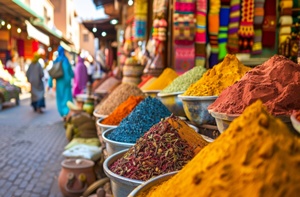
Moroccan spice and herbs market: trade, production practices, and global competitiveness
Abstract
The world spices and herbs market has experienced consistent growth over the last decades, where Asia occupied 81% of the production and the European Union (EU) held the distinction of being the world's largest importer and consumer of these commodities. In Morocco, spice and herbs market is characterized by a rich history and cultural traditions, providing income for rural populations and securing a place in the international market, by ranking 12th in the world for the export of aromatic and medicinal plants. This review gives a special attention to the status of the Moroccan spice and herbs production and market, exploring the evolution of its imports and exports and highlighting the main methods of valorization used in the country such as drying and distillation of essential oils. However, this market faces many challenges that retard its growth and development. Accordingly, a SWOT analysis was conducted to point out the strength and weakness of this market as well as emphasizing the country’s potential for improvement. This review suggests that focusing on sustainable practices, added value, and better quality products could promote this sector and generate a significant economic benefits.
Keywords: Spices, herbs, Morocco, production, market, SWOT analysis
INTRODUCTION
Herbs and spices are rich in many bioactive compounds, which are commonly applied in various industries and play a role in the treatment of certain diseases, such as carotenoids, coumarins, flavonoids, curcumins, lignans, saponins, polyphenolics, sulfides, terpenoids, phthalides, and plant sterols (Leja and Czaczyk, 2016). These compounds have been utilized as antioxidants in various forms such as herbs, ground spices and extracts, emulsions or capsules (Embuscado, 2015).
Herbs and spices contribution on global civilization is widely acknowledged as it facilitated the discovery of novel markets and trade partners (Sendrowicz and Dubelaar, 2020).
In 2021, global spice and aromatic plant production reached 3,152,493 tons, with 1,408,950 hectares of land dedicated to cultivation (Shirkole, 2023). This production depends mainly on wild-collection with an estimated annual collection of 30,000–40,000 tons of dry herbs (Asl Roosta et al., 2017). In general, Asia produced 81% of the global production of herbs and spices. In the other hand, the European Union (EU) holds the distinction of being the world’s largest importer and consumer of spices, with Germany taking the lead as the primary importer, followed by the United Kingdom (UK) (Gordon, 2020).
Within Africa, the spice market is experiencing robust growth, driven by factors such as an expanding middle class, a burgeoning tourism sector, and rising consumer awareness of the benefits of spices and seasonings (Sendrowicz and Dubelaar, 2020).
In Morocco, the spices and herbs market is known by its rich history and cultural traditions (Spices and Culinary Herbs - Morocco, 2024). Moroccan aromatic and herbs sector is characterized by its richness and diversity, out of the over 4,200 vegetable species found in this country, 800 are valued for their aromatic and medicinal properties. Wild-harvested species account for over 90% of the country’s total production (Zrira, 2017).
Despite its natural wealth, Morocco’s spice and herb sector is not well developed. Adding more value to the products and improving processing methods could boost the sector’s potential. By combining traditional practices with modern techniques and focusing on sustainable harvesting, Morocco could expand its market both locally and globally.
The aim of this study is to analyze the current state of Morocco’s spice and herb market, delving into its strengths, weaknesses, opportunities, and challenges. It seeks to provide a comprehensive understanding of how Morocco’s rich biodiversity and traditional knowledge position it in the global market. By comparing Morocco’s market to global leaders like India, the study highlights the country’s potential and identifies areas where improvement is needed, such as in industrial processing and quality standards.
INTERNATIONAL SPICE AND HERBS MARKET OVERVIEW
According to the FAO, the global production of aromatic and medicinal plants was estimated to approximately 330 million tons out of the total area 77 million ha (Argyropoulos et al., 2020). In addition, the world market for seasoning and spices has experienced consistent growth over the years, increasing from a value of 12.7 billion USD in 2012 to an estimated global market worth of 5 trillion USD by 2050 (Sendrowicz and Dubelaar, 2020; Singh et al., 2022).
Nowadays, about 80 % of global imports and exports are concentrated in 12 countries primarily dominated by Asian and European nations. The USA and Germany are particularly important as major trade centers (GIZ, 2021).
In 2023, India and China remained the top exporters of aromatic and medicinal plants under the HS code 1211, with a market share of 33.9%. Thus, we found that the United States of America (USA) was also a major importer of aromatic and medicinal plants followed by Germany with 11.8% and 10.8% share in value of the world’s imports respectively. In the same year, the top exporters of spices under the HS code 0910 were China and India with a market share of 20.5% and 15.8% respectively. For the imports, the USA was the major importer with a market share of 12.7% followed by Germany 6.7% (International Trade Centre, 2024).
India was considered as one of the main exporters of spices and herbs with 880 medicinal plants involved in total Indian trade, where 48 species are exported and approximatively 42 spices are imported. Moreover, China and the USA held the largest share of imports and had a strong potential to lead the global AMP import market (Asl Roosta et al., 2017).
Europe represents a varied and mature market for spices and herbs and embraces five of the world’s top ten importing countries. With over 530 million consumers, Europe’s imports of spices and herbs surpass those of the United States (CBI, 2024). In term of production, 100.000 tons per year of herbs and spices are produced in the EU, with annual imports exceeding three times the amount produced domestically, mostly from Asia, Africa, Latin America and the Caribbean (European Commission, Joint Research Centre, 2021).
Within Africa, the spice market is evolving, with an increasing focus on international trade and domestic growth. Although the majority of spices produced in Africa are traditionally consumed within the continent, recent years have seen shifts in this trend. In 2013, over 23% of Africa’s traded spice value was intercontinental, however, by 2019, this share had dropped to just 11% (International Trade Centre, 2024; Sendrowicz and Dubelaar, 2020). Among international destinations, the Asian continent -particularly countries like India, Indonesia, Vietnam, and several in the Middle East- remained the most significant market for African spices (Sendrowicz and Dubelaar, 2020).
The United States spend around US$ 1.5 billion annually on importing spice commodities, with imports growing at a rate of 10% per year. The major imported spices in terms of quantity include ginger, pepper, capsicum and paprika, cinnamon, cumin, anise/badian, and turmeric. This growing demand is expected to continue, driven by both the high labor costs of domestic spice production and the fact that many spices need tropical or subtropical climates, in which are not typically found in the U.S (Nguyen et al., 2019).
MOROCCAN SPICE AND HERBS MARKET OVERVIEW
Morocco’s flora of Aromatic and Medicinal Plants
Morocco’s unique geographical position offers a remarkable diversity of bioclimates, ranging from humid and sub-humid regions to Saharan and desert climates. The country also features arid, semi-arid, and high-mountain climates, particularly in the Rif, Middle Atlas, and High Atlas mountains, where altitudes exceed 2,500, 3,000, and 4,000 meters, respectively (Zrira, 2020). This varied orography, coupled with Morocco’s specific soils and climatic conditions, provides an ideal environment for a rich and diverse flora, including a significant potential for endemic AMP. As a Mediterranean country, Morocco serves as a true phytogenetic reservoir, home to 41 ecosystems and over 7,000 plant species, of which 4,500 are vascular plants. Among this vast floristic diversity, around 600-800 species are recognized for their aromatic and traditional medicinal uses (Fadil et al., 2014).
The distribution of AMP varies across different geographical regions, with the highest concentrations found in the Rif, High Atlas, and Middle Atlas regions, as well as the plains and plateau of northern Atlantic Morocco. The Rif, in particular, hosts the largest number of taxa, with 459 species and subspecies, followed by the High Atlas (405 taxa), Middle Atlas (396 taxa), and northern Atlantic Morocco (389 taxa) (Jamaleddine et al., 2019).
Production of AMP in Morocco
The harvesting of AMP plays a crucial socio-economic role by diversifying agricultural production and creating employment opportunities for local communities. This activity generates approximately 500,000 working days and an income of 25 million MAD for the local population, providing vital extra revenue for rural communities. For instance, the harvest of Rosmarinus officinalis (rosemary) alone accounts for around 81,000 workdays annually, generating an income of 4,050,000 MAD (Ghanmi et al., 2011).
According to the “Direction du Développement Forestier” (DDF), the production of rosemary increased from 1,160 tons in 2014 to 6,105 tons in 2017. As for the carob tree, the quantity produced also saw an increase between 2014 and 2016. Regarding myrtle, production grew from 15 tons in 2014 to 80 tons in 2015. During the same period, the production and AMPs cultivated area were diverse, reflecting significant variations across different species. Table 1 provides a highlight of some plants illustrating differences in land use and productivity.
However, cooperatives and associations operating in the AMP sector have yet to fully capitalize on the potential of these plants to meet the rising market demand, improve the incomes of marginalized populations, or enhance sector integration. They have also struggled to preserve the environment through the sustainable management of aromatic resources, support the marketing of AMP to expanding markets, and foster synergies between various stakeholders and initiatives in the field (Fadil et al., 2014).
These resources, which represent a significant national wealth and heritage, are exploited to benefit a poor population aiming to improve their livelihoods. However, population pressure and the socioeconomic conditions of these communities have led to unsustainable exploitation practices that severely impact these resources. The methods used to harvest and process AMP in Morocco remained traditional, while other forms of exploitation that could capture added value at the production sites have not been sufficiently promoted. If these practices continue, they may harm the biodiversity of these resources and jeopardize Morocco’s position in the international market (12th place) (Jamaleddine et al., 2019).
Imports and exports
Morocco’s export market is characterized by a low proportion of direct sales of ready-to-use products. The country’s AMPs production is substantial, with an estimated 141 kilotons produced, of which 75% is exported. However, this export-driven industry generates relatively low added value within Morocco, resulting in sales of only 2.2 billion dirhams.
The majority of Morocco’s exports, over 80%, are in bulk form, with essential oils and extracts making up a smaller share of 17%. In terms of global rankings, Morocco is a significant player in the export of unprocessed AMPs, ranking 7th worldwide. However, its ranking drops to 23rd for essential oils (Berrissoule, 2019).
In the aromatic plants sector, Morocco exported an average of 26,263 tons of aromatic plants annually between 2015 and 2019, with rosemary leading the exports, followed by mint as shown in Table 2 (Zrira, 2020).
According to FAOSTAT, Morocco’s spice production in 2022 reached 33,000 tons, with 30% of this quantity designated for export during the same year. Additionally, Morocco imported 38,000 tons of spices (“FAOSTAT,” 2024). Table 3 presents the quantities of spices exported in tons between 2015 and 2019. The main spices exported are coriander seeds (82.4%), ground paprika (16.6%) and fenugreek (0,2%) (Zrira, 2020).
Moreover, in the perfume plant class, Morocco exported an average of 252 tons of plants between 2015 and 2019. The iris stands out for the highest production, followed by oakmoss, then rosebuds (Morocco Foodex, 2020). In terms of volume Moroccan perfume plants production was estimated, between 2015 and 2019 at:
• The iris: 142 T for a value of 9 825 MDH
• The oakmoss: 96 T (1 669 MDH) and
• The rosebuds: 33 Tons, for a value of 4 569 MDH.
AMPs can take two marketing channels before expanding to the final market. The first are companies often integrated within the downstream segment of the value chain, by processing and organizing product collection. The second channel primarily composed of exporters and traders who receive the order then begin seeking for either a wholesaler or a collector with the product in stock (Ghanmi et al., 2014).
The socioeconomic role of aromatic and medicinal plants (AMP) is incontestable; their valorization in the form of dried plants, essential oils, or aromatic extracts provides a good alternative to diversify agricultural production. They also constitute a source of employment and income for the rural mountain populations, and a source of foreign currency for the country’s economy. Export revenues are estimated at more than 2 billion MAD and provide more than 500,000 workdays with a total income of 25 billion MAD per year.
Methods of Valorization
In Morocco, there are various methods of valorizing aromatic and medicinal plants, including their use in local products such as herbal teas, bread, sauces, butter, honey, dates, and couscous flavored with aromatic plants. Proper packaging of these products could further enhance their value (Fadil et al., 2014). Morocco has a long-standing tradition and extensive knowledge in the use of AMP, particularly in traditional pharmacopoeia (Jamaleddine et al., 2019).
AMP offer significant advantages due to the growing recognition of the diverse applications of their essential oils (EOs), which are known for their anti-inflammatory, antiseptic, antiviral, antifungal, bactericidal, and detoxifying properties (Louis et al., 2010). These plants are multifunctional, contributing not only to enriching pastures and honey production but also playing an important role in traditional medicine. Some AMP are processed before entering the market, providing additional value. Both cultivated and wild AMP offer an alternative income source for local communities (Ghanmi et al., 2014).
A diverse variety of species are used in the production of essential oils or other aromatic extracts, mainly destined for the cosmetic, perfume, and hygiene industries, alongside for flavor formulations (Ghanmi et al., 2014). However, in Morocco, the drying and extraction of essential oils are some of the most common methods for valorizing AMP.
The drying process could be done naturally in the sun or drying in the shade using only ambient air without any special treatment, Secondly, industrial drying is particularly recommended for processing large quantities of plants, as it enables precise control of drying parameters and ensures the production of high-quality dried products. Another method is solar drying, which uses the sun as a source of energy to dehydrate products. This type of drying is recommended for small and medium quantities to be dried. Ambient air, heated in a solar energy collector, is then used in a chamber to dry the product.
The distillation of essential oils is done by three methods, first hydrodistillation where the plant material to be distilled is in direct contact with boiling water. Evaporation in the still can be achieved either through direct heating (alambic bare fire) or by injecting superheated steam.
Secondly, the vapohydrodistillation in which the plant material is backed by a grid or perforated plate positioned at an adequate distance from the bottom of the still, which is partially filled with water.
Thirdly, steam distillation is the most technically advanced method of distillation. While it is similar to hydrodistillation, it differs in that no water is present at the bottom of the still. Instead, saturated or superheated steam, generally under pressure exceeding atmospheric levels is introduced through a piping system at the bottom of the still and directed upward through the plant material, facilitating the release of volatile compounds (Zrira, 2020).
Unfortunately, many of the dried plants are exported in bulk, often of low quality and with limited added value. Essential oils are also exported raw, without further processing. These oils are often sent to European or U.S. markets, where they undergo secondary processing, rectification, or purification. Interestingly, Moroccan essential oils, once processed or packaged, are re-imported at prices 5 to 10 times higher than their export value (Ghanmi et al., 2014).
In recent years, initiatives aimed at valorizing essential oils in cosmetics have emerged. Additionally, the past decade has seen the rise of several women’s cooperatives, driven by development projects, which have innovated in the packaging and labeling of dried AMP, floral waters, essential oils, and some cosmetic products. These efforts reflect Morocco’s growing focus on adding value to its aromatic resources and improving market access (Zrira, 2020).
SWOT ANALYSIS
In order to provide a better understanding of the current state, potential strategies and highlight the main challenges facing the Morocco’s AMP sector a SWOT analysis can be undertaken to describe:
• Strengths: The main advantages and strong points within the organization and how it operates.
• Weaknesses: Specific problems or limitations faced by the sector.
• Opportunities: Possible benefits or chances for growth in the sector.
• Threats: Risks or challenges that could slow down or stop the sector’s development.
Morocco has several strengths and opportunities in the AMP market. Its varied flora, combined with the ancestral know-how in the production and processing of these plants additionally, this sector benefits of a growing demand, especially with the big interest to the natural and organic products.
In the other hand, a lot of weakness and threats were identified the sector struggles to market local products internationally, due to non-compliance with quality standards such as those required by the US food and drug administration. Additionally, the lack of added value production by exporting AMPs in the dried forms, plus there is limited funds for basic and applied research.
To address these challenges, Morocco should invest in modern processing units for high value-added products, meet strict international quality standards and therefore focus on research and innovation.
Comparative Analysis
Morocco is home to an exceptional diversity of medicinal and aromatic plant (AMP) species, offering an incredible diversity that is particularly evident in wild-harvested plants like rosemary, thyme, and oregano. These plants flourish across the country’s diverse climates, forming a vital part of local traditions and livelihoods. They support rural economies, provide income for communities, and carry deep cultural significance. However, despite their abundance and importance, the full potential of these plants remains underexploited due to limitations in cultivation techniques and industrial development (Zrira, 2020).
Morocco’s most exports are limited to raw or minimally processed products, such as dried herbs and basic essential oils. This approach leaves much of the sector’s potential untapped, as it misses out on the higher profits that come from processing and creating value-added products (Berrissoule, 2019).
In contrast, countries like India have taken a different path, investing heavily in large-scale farming and advanced processing technologies. India’s spice exports are increasingly focusing on spice oils, oleoresins and dehydrated products, where the country holds a significant, if not leading, position in the global market. Additionally, many exporters are seeking to establish their brands and expand into the packaged consumer products sector (Jaffee, 2004).
Another critical challenge for Morocco is keeping up with international quality standards. Its production rates and product quality vary significantly, which typically leads to a loss of market share (Ghanmi et al., 2014). In the other hand, countries such as India reinforce maintaining high product quality and complying with evolving standards, thus, it invests in technologies that ensure hygiene and the quality assurance, resulting in the strengthening of their reputation in the global market (Jaffee, 2004).
CONCLUSION
In conclusion, Morocco’s spice and herbs sector holds significant potential, driven by its rich biodiversity, traditional knowledge, and favorable climatic conditions. The country’s diverse flora, with numerous endemic species valued for their aromatic and medicinal properties, presents ample opportunities for both local and international markets. However, despite this potential, challenges remain, including the predominance of wild-harvested plants, lack of advanced processing infrastructure, and inconsistent quality control. The sector has yet to fully capitalize on its resources,
By focusing on sustainable practices, value-added and better quality products, Morocco can unlock the full potential of its AMP sector, generating significant economic and environmental benefits. This will position the country as a key global player in the AMP market, capitalizing on its rich natural resources and traditional expertise.
REFERENCES
Argyropoulos D., Carmody K., Cogliandro A., Cortegano M., Jongh W., Paoli A., Fernández-Moya J., Cavaleiro C., Frémondière G., Grigoriadou K., Księżopolski R., Jakopovic S., Palos E., Nicola S., Olsanska G., Peycheva-Miteva G., Primavera A., Redek J., Rode J., Puri S. (2020). EIP-AGRI Focus Group Plant-based medicinal and cosmetic products. Final Report.
Asl Roosta R., Moghaddasi R., Hosseini S.S. (2017). Export target markets of medicinal and aromatic plants. J. Appl. Res. Med. Aromat. Plants, 7: 84–88.
Berrissoule B. (2019). Plantes aromatiques et médicinales: Le Maroc a raté le virage. L’Economiste. https://www.leconomiste.com/article/1041402-plantes-aromatiques-et-medicinales-le-maroc-rate-le-virage.
CBI (2024). What is the demand for spices and herbs on the European market? CBI Minist. Foreign Aff. https://www.cbi.eu/market-information/spices-herbs/what-demand.
Embuscado M.E. (2015). 11 - Herbs and spices as antioxidants for food preservation, in: Shahidi, F. (Ed.), Handbook of Antioxidants for Food Preservation, Woodhead Publishing Series in Food Science, Technology and Nutrition. pp. 251–283.
European Commission. Joint Research Centre. (2021). Results of an EU wide coordinated control plan to establish the prevalence of fraudulent practices in the marketing of herbs and spices. Publications Office, LU.
Fadil M., Farah A., Haloui T., Rachiq S. (2014). Diagnosis of the aromatic and medicinal plant sector in Morocco: Case of the cooperatives and associations of the Meknès-Tafilalt area. Lazaroa, 35: 155–166.
FAOSTAT (2024). URL https://www.fao.org/faostat/en/#data/FBS.
Ghanmi M., Aafi A., Satrani B., Aberchane M., Khia A., Yakhlef S.E.B. (2014). Aromatic and Medicinal Plants in North Africa: Opportunities, Constraints and Prospects, in: Novel Plant Bioresources. John Wiley and Sons, Ltd, pp. 409–423.
Ghanmi M., Satrani B., Aberchane M. (2011). Plantes aromatiques et médicinales du Maroc: Les milles et une vertus. http://www.abhatoo.net.ma.
GIZ (2021). Practical market insights into the product group of Medicinal and Aromatic Plants.
Gordon A. (2020). Market and technical considerations for spices: Nutmeg and Mace case study, in: Food Safety and Quality Systems in Developing Countries. Elsevier, pp. 367–414.
International Trade Centre (2024). Trade Map - Trade statistics for international business development. https://www.trademap.org/Index.aspx.
Jaffee S. (2004). Delivering and taking the heat: Indian spices and evolving product and process standards.
Jamaleddine M., Oualidi J.E., Taleb M.S., Alaoui-Faris F.E.E., Benzine A. (2019). Les plantes aromatiques et médicinales au Maroc: statut, endémisme, chorologie et bioclimat. Médecine Thérapeutique, 25: 185–191.
Leja K.B., Czaczyk K. (2016). The industrial potential of herbs and spices-a mini review. Acta Sci. Pol. Technol. Aliment., 15: 353–365.
Louis B., Nguefack J., Roy P. (2010). Evaluation of Antifungal Potential of Ocimum gratissimum Extracts on Two Seedborne Fungi of Rice (Oryza sativa L.) in Cameroon. Asian J. Biol. Sci., 4: 306–311.
Morocco Foodex (2020). Exportations des épices - herboristerie, les statistiques des exportations marocaines pour les principales plantes aromatiques et médicinales.
Nguyen L., Duong L.T., Mentreddy R.S. (2019). The U.S. import demand for spices and herbs by differentiated sources. J. Appl. Res. Med. Aromat. Plants, 12: 13–20.
Sendrowicz T., Dubelaar W. (2020). Business opportunity report, Spices sector in Ethiopia.
Shirkole C.L.H., Shivanand S. (2023). Overview of the Global Market for Dried Herbs, Spices, and Medicinal Plants, in: Drying of Herbs, Spices, and Medicinal Plants. CRC Press.
Singh P.A., Bajwa N., Chinnam S., Chandan A., Baldi A. (2022). An overview of some important deliberations to promote medicinal plants cultivation. J. Appl. Res. Med. Aromat. Plants, 31: 100400.
Spices and Culinary Herbs - Morocco | Market Forecast, (2024).Statista. http://frontend.xmo.prod.aws.statista.com/outlook/cmo/food/sauces-spices/spices-culinary-herbs/Morocco.
Zrira S. (2020). Plantes aromatiques et médicinales du Maroc: caractérisation, production et marché, IAV Hassan II.
Zrira S. (2017). Some Important Aromatic and Medicinal Plants of Morocco, in: Neffati, M., Najjaa, H., Máthé, Á. (Eds.), Medicinal and Aromatic Plants of the World - Africa Volume 3, Medicinal and Aromatic Plants of the World. Springer Netherlands, pp. 91–125.