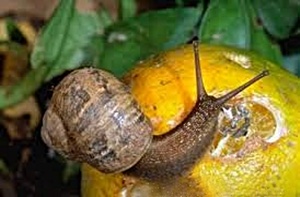
Biological control: A sustainable strategy against invasive citrus snail
Abstract
Snails are polyphagous pests that cause damage to several crops worldwide. They feed on the leaves and fruits of this crop and transmit certain fungal diseases. The present study aims to elucidate the protective role of the biological control approach against invasive snails. Citriculture in Morocco, particularly in the Gharb region, faces several phytosanitary problems, including snails. Three species, Theba pisana, Helix aspersa, and Eobonia vermiculata, have been associated with citrus orchards in this region. The current practice to combat these pests predominantly rely on molluscicidal products containing active ingredients such as metaldehyde, abamectin, indoxacarb, chlorfluazuron, and spiromesifen. However, due to the negative effects of chemical control on the environment and non-target species, these products are not a sustainable primary strategy for managing snail invasions. Effective management of invasive snails requires an integrated pest management (IPM) approach, such as i) cultural methods like manual collection from the trunk and branches, ii) Physical control using barrier traps that can be optionally combined with mineral oil, or attractants, and iii) Biological control can be achieved through the use of parasitic nematodes or plant extracts. Promising biological agents such as essential oil extracted from Citrus limon zest, aqueous extract of thyme, as well as lupin extract nanoparticles coated with copper sulfate and starch, which have demonstrated 100% mortality and inhibited egg laying.
Keywords: Invasive Snails, Theba pisana, Eobonia vermiculata, Citrus orchards, Biological controls, Sustainable
INTRODUCTION
Morocco is a country with a strong agricultural vocation. For this reason, Morocco’s economic policy has given priority to the development of the agricultural sector, with the aim of making agriculture a driver of economic growth. At the national level, citrus farming is one of the key sectors of the Moroccan economy, with an area of approximately 129,333 hectares, of which 31% are in the Gharb region, and an average production of 2.4 million tons during the 2021-2022 campaign, of which 766,500 tons were destined for export (Morocco citrus, 2023). At the dawn of the 21st century, in Morocco where the areas reserved for citrus farming can hardly increase, this crop is called to be increasingly intensified. Such intensification, based on the use of high-yielding varieties, which are demanding in fertilization, water, weeding, and other cultural operations, allows trees to have good vegetative development, humid and shaded, often favorable and conducive to phytosanitary problems, particularly pests and diseases.
In recent years, citrus farming has seen the emergence of a pest that was considered secondary and is increasingly causing significant damage. These are land snails that feed on a variety of living plants and decomposing plant materials. They cause direct and indirect damage, with direct damage manifesting as consumption of foliage and creation of irregular holes on fruits and flowers during the night, only to disappear at sunrise, leaving a slimy trail that becomes shiny when dried (Wilen and Flint, 2018), while indirect damage concerns the transmission of gummosis to phytophthora (Benfradj et al., 2018). As a result, these snails are responsible for significant economic losses that can reach 15% at the packing stations.
To maximize production and obtain high-quality fruits while reducing the extent of damage caused by snails, citrus growers in Morocco, especially in the Gharb region, resort to some cultural and chemical practices. These practices, in addition to being exhausting and expensive, only allow modest minimization of damage and pose problems of resistance, residue management, as well as negative impacts on fauna and flora. It is therefore necessary to resort to other methods of control, including biological control using plant extracts (essential oils, aqueous extracts, etc.) (Elfoudali et al., 2024; Kourime et al., 2025).
To this end, the present work was set to identify the main species of citrus pest snails in Morocco, as well as different methods of control, ranging from cultural practices to biological and chemical control.
CITRUS PEST SNAIL SPECIES IN MOROCCO
Several species have been associated with citrus orchards at the national level since 2007. Studies conducted in the Gharb region have reported the presence of three snail species: T. pisana, H. aspersa, and E. vermiculata (Elfoudali et al., 2024; Kourime et al., 2025). The three species are eukaryotic mollusks belonging to the class Gastropoda, family Helicidae (Korábek et al., 2022).
Theba pisana (Müller, 1774)
Morphology
According to the Helicidae key in Australia, Theba pisana is characterized by a relatively high shell, small in size (reaching up to 2 cm in diameter, axial view). The shell is usually white with discontinuous dark brown spiral bands and chevron markings. The juveniles show angular whorls, which become rounded in adults. The umbilicus is narrow, and the aperture is rounded and medium-sized. In adults, the lip of the shell is thickened on the inside and non-thickened or reflected on the outside (Blacket, 2016).
Biology and Ecology
Regarding their life cycle, snails estivate when conditions are dry or when temperatures are high, and hibernate in cold conditions. The duration of estivation and hibernation, and thus the length of the cycle, varies depending on the area. For example, in Morocco the cycle is annual, while in some regions of France and Italy, the cycle is biennial (Heller, 2009).
Theba pisana is a cross-fertilizing hermaphrodite. Compared to other Helicidae snails, it has a short lifespan (1-2 years), is semelparous (reproduces only once in a season), and produces a large number of small eggs (4566 eggs per couple) (Baker, 1991; Cowie, 1984).
The eggs are laid one or two centimeters below the surface of the soil in cavities dug by the snails (Cowie, 2009).
Distribution
Theba pisana is typically a species of coastal habitats, often found in sandy arid climates regions characterized by hot to warm conditions. Its native range includes almost the entire Mediterranean coastline and extends along the Atlantic coast (Johnson, 2011; Mizrahi et al., 2016). It also occurs inland, notably in Morocco, Algeria, Spain, Portugal, western and southern France, although its abundance is frequently in the interior non-coastal localities of these regions, compared to coastal areas (Cowie, 2009). It has been suggested on various grounds that Theba pisana original natural range may have been confined to Morocco. Alternatively, at least some, if not most, of its distribution around the Mediterranean and western Europe is the result of human activities in historical times, and therefore, Theba pisana should be regarded as invasive in those areas where it can reach extremely high abundances (Elfoudali et al., 2024; Mizrahi et al., 2016).
Eobonia vermiculata (Müller, 1774)
Morphology
The key of Helicidae species in Australia describes Eobonia vermiculata as possessing a relatively depressed shell, medium-sized (reaching up to 3 cm in diameter, axial view). The shell range from light brown to yellow, usually marked by thick, continuous dark brown and white spiral bands, with yellow spots. The whorls are rounded, the umbilicus is usually closed, and the aperture is small, compressed, and shaped. In adults, the lip of the shell thickens in white and strongly reflects (Blacket, 2016; Elfoudali et al., 2024; Kourime et al., 2025).
Biology and ecology
Eobonia vermiculata is a phytophagous and detritivorous species, active all year round except during cold periods (when hibernation occurs in the north of its range) and during hot and dry periods (when estivation occurs in the south of its range). The lifespan of this species lasts between 2 and 6 years. Mating occurs in autumn after the first rains, provided they are continuous. Subsequently, oviposition occurs 20 days after fertilization and adults that have laid eggs die after 1 to 2 months. During the winter, adults secrete one to three membranous epiphragms and burrow into the soil to a depth of 3 to 5 cm, while young individuals protect themselves under leaves, stones, etc (Kourime et al., 2025; Lazaridou-Dimitriadou and Kattoulas, 1983).
Distribution
E. vermiculata is native to the Mediterranean region and has become a very common species in the Mediterranean and the most widespread in the world, except for southern South America and certain Pacific islands (Kourime et al., 2025). Non-native populations of E. vermiculata have been established in various regions, such as Germany, the Netherlands, Belgium, Hungary, Australia, the United States, Japan, Saudi Arabia, Jordan, Egypt, and South Africa. This species has been established in the United States and is considered a potentially serious threat (CABI.org, 2023).
Helix aspersa (Müller, 1774)
Morphology
The shell is large (up to 4 cm in diameter), thin-walled, with a raised spire, globular, with 4-5 rapidly expanding whorls. It features a strongly flared whorl, a wide and rounded aperture, a closed umbilicus, and a thickened, white and strongly reflected lip in adults. The shell is light brown in color with darker spiral bands and yellow spots.
During estivation, the snail has a thin and transparent or thickened and greenish-gray epiphragm, which is non-convex and situated within the aperture. The body is soft, grayish- green with a pale dorsal band.
Adults are identified by the presence of a thickened reflected lip, indicating maturity and cessation of growth (Blacket, 2016).
Biology and ecology
Helix aspersa is an obligate cross-breeding species. A mature snail mates 2–6 times per season, with each mating event lasting 4–12 hours. It is an oviparous species; fertilized eggs are encapsulated in a partially calcareous shell and laid with little to no embryonic development. Individuals deposit spherical or oval white eggs, approximately 3–5 mm in diameter, into a cavity 4–7 cm deep that they excavate with their foot in moist, loose soil. Egg cannibalism by neonates is common, with around 70% of newborns ingesting at least one egg during their first four days of life while remaining in the natal cavity. Mating and oviposition frequencies are influenced by abiotic factors (e.g., temperature, photoperiod, humidity, soil conditions) and biotic pressures such as population density (CABI.org, 2023).
Like several other snail species, Helix aspersa undergoes periods of inactivity, hibernation, and/or estivation, depending on the climatic conditions of its habitat. Studies have shown that the physiological transition between dormancy (estivation/hibernation) and awakening is controlled by enzymes, the main ones being selenium-dependent glutathione peroxidase (Se-GPX) and glutathione S- transferases (GST) (Ramos-Vasconcelos et al., 2005).
Distribution
Helix aspersa is widely distributed in Mediterranean countries, Africa, North America, and Europe (Blacket, 2016).
Tree-level dispersion
The distribution of snails at the tree level, both vertically and horizontally, is a very important parameter in determining the orientation of treatments at the tree level. These two types of dispersion vary between species. In the case of E. vermiculata, the concentration of snails decreases vertically with tree height, with a maximum of 1 meter from the surface of the ground, so it is recommended to orient treatments towards the surface of the ground and the trunk of the tree (Ismail et al., 2017).
Host plants
These three species of Helicidae are phytophagous and have a wide range of host plants, including mainly: acacia, onion, white alder, celery, oat, sugar beet, cabbage, cauliflower, turnips, brome grass, citrus, carrot, fennel, legumes, barley, lettuce, alfalfa, date palm, peas, almond, radish, mulberry, raspberry, tomato, cereals, grapevine, maize, etc (CABI.org, 2023).
Damage caused by citrus pest snails
Direct damage
Snails are not linked to a special plant; they consume different crops and decaying plant matter. Their feeding damage is characterized by irregular holes with smooth edges on leaves, fruits and flowers. This type of damage caused by snails can be visually similar to the feeding of other pests such as caterpillars, earwigs, or other chewing insects. The silver mucus trails can confirm that the damage was possibly caused by snails or slugs (Wilen and Flint, 2018).
Indirect damage
Transmission of Phytophthora gummosis: Symptoms of discoloration of the surface of the bark, formation of cankers, and exudation of gum have been observed on citrus treated with snails previously fed on a substrate containing Phytophthora spp. These symptoms were exactly the same as those observed in citrus infected naturally with gummosis, including canker formation, bark discoloration, and gum exudation.
Disease symptoms were influenced by seasonal timing. Experiments conducted in May and June resulted in a significant highest infection rate compared to those conducted in August and September. Spatially, infections were most frequently observed in the median third of the trees across all experiments. However, symptoms were only observed in the lower third of citrus plants in May and June trial (Benfradj et al., 2018).
CONTROL STRATEGIES USED AGAINST LAND SNAILS
Cultural control
Orchard maintenance
Soil tillage and inversion, tree pruning, good fertilization, and spraying with Bordeaux mixture were applied from November to January in Egypt. These cultural operations resulted in a reduction of 14.6%, 13.4%, and 11.3% in populations of Theba pisana, Monacha cartusiana, and Eobonia vermiculata, respectively (Rizk et al., 2017).
Manual collection
Snails were collected from the trunk and branches every 15 days from June to September. This method resulted in a reduction of 33.0%, 29.7%, and 31.2% in populations of Theba pisana, Monacha cartusiana, and Eobonia vermiculata, respectively (Rizk et al., 2017).
Physical control
Barrier traps
Cone barriers are a physical control method that prevents snails from climbing onto the trees. Each device is made of a plastic sheet shaped like a cone, mounted approximately 20 cm above the ground around the tree trunk. Its upper part (cone tip) is attached to the tree trunk with a plastic reinforcement. Its effectiveness can be improved by placing a mineral oil-coated sheet on the outer upper edge. This has a very strong oily odor and can reduce snail percentages on trees by up to 20% (Kheirodin et al., 2012).
Attractive traps
Wheat straw baited traps
An attractive bait was prepared from 5 kg of cereal bran, 0.5 kg of molasses, and 1 liter of water.
0.25 kg of this mixture is used to bait wheat straw covered by a cloth and used as an attractive trap. These traps are placed as 1 trap every 5 trees and 1 trap every 10 trees during winter and spring. When the traps are installed every 5 trees, populations of Theba pisana, M. cartusiana, and E. vermiculata were reduced by percentages of 51.3%, 48.9%, and 55.0%, respectively, while installing one trap every 10 trees gives reduction percentages of 29.3%, 33.3%, and 32.0%. Thus, the results showed that these traps were more attractive to E. vermiculata than the other two species (Rizk et al., 2017).
Fermented bread dough traps
Fermented bread dough (flour, water, and yeast) has been shown to be effective in attracting harmful mollusc species in trials conducted in Hawaii, Oregon, Montana, and laboratory conditions. The dough attracted harmful snails, including major economically important invasive species such as H. aspersa and Ambigolimax valentianus (Limacidae), than water controls. Adult H. aspersa were significantly more attracted to the dough than to water controls. The attraction duration for the dough remains up to 8 days and has been shown to be significantly more attractive than a metaldehyde-based bait, which is widely used against snails (Veasey et al., 2021).
Synthetic lure traps and banana, papaya-flavored oils baited traps
Banana and papaya scented oils were tested to determine if Lissachatina fulica (Férussac, 1821) moves towards daytime shelters and feeds on lures dosed with one of the scented oils. The lures were made by saturating standard-sized dental cotton wicks with 4 ml of an emulsion consisting of a 1:1:0,2 mixture of tap water, mineral oil, and Tween80 surfactant. Subsequently, the scented oil was added to each wick. Wicks treated with papaya and banana scented oil emulsions caused Giant African Snails to stop moving towards daytime refuge areas and return to open air (Roda et al., 2019).
Chemical control
Chemical control using ovicidal products
Imidacloprid and fipronil can be used as active ingredients to significantly reduce the hatching rate of Eobonia vermiculata eggs, up to 22.7% and 16.2%, respectively (Hussein and Sabry, 2019). This parameter is calculated using the following formula:
Hatching rate = (Number of hatched eggs/Number of treated eggs) x 100
Chemical control through the use of adulticides
The majority of molluscicide active ingredients target adults. Metaldehyde, abamectin, indoxacarb, spiromesifen, and methyl parathion have been tested against E. vermiculata. Indoxacarb was found to be the most effective, followed by abamectin and spiromesifen, with mortality rates of 100%, 73.3%, and 60%, and LD50s of 58.6 ppm, 83.3 ppm, and 280.9 ppm, respectively (Hussein and Sabry, 2019).
Spraying metaldehyde against H. aspersa resulted in increasing mortality rates with increasing concentration. The use of 25% WP metaldehyde resulted in mortalities of 75.5%, 81.2%, and 98.5% with doses of 1.2, 2.4, and 4.8 g/L, respectively, while 50% WP metaldehyde resulted in mortality of 87.8% at a dose of 1.2 g/L (Pappas and Carman, 1961).
Application of 2% metaldehyde baits resulted in reduction percentages of 76.7%, 74.2%, and 73.2% for T. pisana, M. cartusiana, and E. vermiculata, respectively (Rizk et al., 2017).
In E. vermiculata, chlorfluazuron exhibited greater toxicity via contact exposure (LD50: 1528) than as bait (LD50: 1992). On the other hand, chlorfluazuron induced malformations of the reproductive system organs in snails compared to untreated animals, causing significant swelling of the size of the vagina, penis, oviduct, spermiduct, and albumin gland, and led to the absence of eggs in the ovotestis (Figure 5). In field conditions, chlorfluazuron resulted in a 78.7% reduction in snail population (Mobarak, 2016).
The use of abamectin and its nano-derived form induced alterations in certain biochemical pathways, which could lead to significant cellular and metabolic damage. The use of pesticides based on this active ingredient affected vital enzyme activities in H. aspersa, where they significantly imposed inhibition of Acetylcholinesterase in ganglion homogenate. This enzyme plays an important role in catalyzing the hydrolysis of the neurotransmitter acetylcholine to maintain normal nerve impulse conduction (Yassin et al., 2021).
Biological control
Use of plant extracts
Use of essential oil extracted from citrus fruits
The essential oil was extracted from the zest of lemon fruits (Citrus limon) by hydrodistillation. Chemical analysis by chromatography coupled with spectroscopy shows that this oil is mainly composed of limonene (Table 1). Tests carried out with concentrations of 10, 25, 50, 75, and 100 ppm for molluscicidal activity. In all tests, the percentage of mortality increased with an increase in concentration. Thus, these percentages were higher with a concentration of 50 mg L-1. The LC50 value for molluscicidal activity is 13.0 ppm (Barros Gomes et al., 2019).
Use of neem extracts
The effect of commercial neem extract was evaluated against adult snails and the hatching of eggs of two species, E. vermiculata and M. cartusiana, under laboratory conditions. The study examined the efficacy of the neem extract on egg hatchability, feeding deterrence in juveniles, and adult snail mortality (Ismail et al., 2010).
The results showed that at high concentration (400 ppm), the neem extract decreased the hatching to 50% for M. cartusiana and 42.5% for E. vermiculata. In addition, the neem extract has a concentration effect against adult M. cartusiana snail, the mortality increased with high concentration, reaching 20%, 40%, 55% at the end of the experiment for doses of 0.625%, 1.250%, and 2.5%, respectively.
The extract also showed an anti-feeding effect on juvenile snails of M. cartusiana. Feeding consumption reached 9.6 mg (after 3 days) for the highest concentration (200 ppm) against 31.9 mg for untreated juveniles (Ismail et al., 2010).
Use of copper-coated lupin extract nanoparticles
Nanoparticles are prepared from lupin extracts using ethanol, then coated with starch and copper sulfate, through a direct physical gelation encapsulation process. Subsequently, the effect of these nanoparticles on the egg productivity and mortality of two aquatic snails, Bulinus truncatus and Biomphalaria alexandrina, and a land snail, E. vermiculata, was studied (Azzam et al., 2019; Dummee et al., 2015).
The results show that after 24 hours of exposure in dark conditions, nanoparticles coated with copper sulfate and starch caused 100% mortality in the tested species. Furthermore, both aquatic snails (B. alexandrina and E. vermiculata) showed complete blockage of oviposition. It should be noted that E. vermiculata individuals, treated or not, did not lay eggs, as this species had a specific breeding season that did not coincide with its specific reproductive season (Azzam et al., 2019).
Use of aqueous extracts of thyme
The molluscicidal effect of the aqueous extract of Thymus vulgaris (thyme) on E. vermiculata was tested (Ali and Mohammad, 2017). Chemical analysis by chromatography was carried out to determine the active principles, which showed that the extract used is mainly composed of: 2-bromo dodecane, 3-methylindole, n-tricosane, octadecanedioic acid, and dimethyl ester of tetradecanedioic acid. The highest mortality rate (83.3%) was recorded at a concentration of 12.5 ppm, and the LC30, LC50, and LC90 were 5.832 ppm, 8.029 ppm, and 13.398 ppm, respectively. In addition, the snails showed morphological alterations, such as body swelling due to water retention, which led to a slowdown in snail movement, and protrusion of the tentacles and foot due to their enlargement. Samples of the tegument, mantle edge, digestive gland, and gonads were dissected and prepared for histological examination under an optical microscope. Some morphological abnormalities in the tissues were recorded (Ali and Mohammad, 2017).
Evaluation of the effect of several essential oils on Helix aspersa
The effect of several commercial essential oils on the mortality of Helix aspersa eggs and adults was evaluated by placing the individuals in Petri dishes containing a filter paper soaked with solutions of 1 ppm concentration (Ahmed et al., 2021; Mc Donnell et al., 2016).
Continuous exposure of Helix aspersa eggs and juveniles to eleven essential oils (1%), one terpene (D-limonene, 1%), and the surfactant Tween 80 (2%) resulted in variable mortality rates. Among eggs, several essential oils—including cedarwood, cinnamon, clove bud, garlic, lemongrass, peppermint, pine, and spearmint—induced 100% mortality. Rosemary also showed high ovicidal activity, with a mean mortality of 91.3 ± 15.5%. In contrast, bitter orange (51.9 ± 19.5%), eucalyptus (32.8 ± 27.3%), and D-limonene (16.9 ± 9.3%) exhibited moderate ovicidal effects. No egg mortality was observed with Tween 80 (Mc Donnell et al., 2016).
In juveniles, cinnamon, clove bud, garlic, lemongrass, peppermint, pine, and spearmint caused complete mortality (100%). Rosemary also demonstrated strong molluscicidal activity, with a juvenile mortality of 93.3 ± 5.6%. Conversely, bitter orange, eucalyptus, and D-limonene produced no juvenile mortality, while cedarwood showed limited efficacy (20.0 ± 26.5%). Tween 80 caused no mortality, confirming its suitability as a non-toxic control (Mc Donnell et al., 2016; Pereira et al., 2020).
Use of Rumina decollata as a biological control agent
Rumina decollata (Linnaeus, 1758) is an important predator of Helix aspersa and can consume both eggs and adults with a preference for snails that are smaller or equal to 14 mm. The average total consumption per individual was 3 eggs per 7 days (Mc Donnell et al., 2016).
Use of ducks
A study examined the potential of ducks for the control of the golden apple snail, Pomacea canaliculata, in rice paddies. The smaller duck (700 g) attacked snails more than the larger duck (1,300 g). The ducks can attack over 90% of snails by the second day of release. The timing of duck release was more effective at seven days after snail inoculation than simultaneous release (Kim et al., 2007).
Use of parasitic nematodes
The parasitic nematode of snails, Phasmarhabditis sp. of the family Rhabditidae, has shown the ability to generate 100% mortality of adult and egg stages of the species Eobonia vermiculata, and therefore, this nematode can play an important role in controlling this pest in all stages of development (Azzam and El-Abd, 2021).
CONCLUSION
Citrus crops are an essential component of Moroccan agriculture. Much effort has been made to improve the production potential of these crops to meet the needs of the population and maximize exports. However, despite all these efforts, yields remain variable compared to the actual production potential. This situation is largely dependent on varying climatic conditions and biotic stress due to attacks by a multitude of diseases and pests, including snails, which are one of the key pests in citrus orchards in the Gharb region. Controlling these Helicidae, namely Theba pisana, Helix aspersa, and Eobonia vermiculata, is crucial to providing favorable conditions for different varieties to express their potential. Through this review, a diversity of cultural (orchard maintenance, manual picking), physical (barrier traps and attractant traps), chemical (use of ovicides and adulticides), and biological (use of plant extracts, parasitic nematodes, predator snails, etc.) control methods were gathered. In this regard, integrated control technology packages must be developed to reduce economic losses due to snail attacks. These packages should be developed through a better understanding of the biology and ecology of these Helicidae, following field surveys over several years, as well as contextualizing these control methods with the national citrus environment, particularly in the Gharb region, in the hope of finding a better strategy to combat citrus pest snails, ensuring better technical and economic efficiency with minimal negative impact on the environment.
REFERENCES
Ahmed Q., Agarwal M., Al-Obaidi R., Wang P., Ren Y. (2021). Evaluation of aphicidal effect of essential oils and their synergistic effect against Myzus persicae (Sulzer) (Hemiptera: Aphididae). Molecules, 26: 3055.
Ali S.M., Mohammad T.A. (2017). Molluscicidal effect of Thymus vulgaris extract on the land snail Eobania vermiculata. Egyptian Journal of Zoology, 67:135-148.
Azzam K.M., Abdel-Hady E.A., Khedr E.K. (2019). Effect of copper coated lupine extract nanoparticles on some aquatic and terrestrial pest snails. Arab Universities Journal of Agricultural Sciences, 27: 2291–2302.
Azzam K.M., El-Abd N. (2021). First record of Phasmarhabditis sp. From eggs of Eobania vermiculata (Müller) snails in Egypt and their response to host size. Egyptian Journal of Biological Pest Control, 31: 48.
Baker G.H. (1991). Production of eggs and young snails by adult Theba pisana (Muller) and Cernuella virgata (Da Costa) (Mollusca, Helicidae) in laboratory cultures and field populations. Australian Journal of Zoology, 39: 6.
Barros Gomes P.R., Oliveira M.B., De Sousa D.A., Da Silva J.C., Fernandes R.P., Louzeiro H.C., De Oliveira R.W.S., De Paula M. D.L., Mouchrek Filho V.E., Fontenele M.A. (2019). Larvicidal activity, molluscicide and toxicity of the essential oil of Citrus limon peels against, respectively, Aedes aegypti, Biomphalaria glabrata and Artemia salina. Eclética Química Journal, 44: 4.
Benfradj N., Vettraino A.M., Tomassini A., Bruni N., Vannini A., Boughalleb-M’Hamdi N. (2018). Citrus gummosis incidence and role of ants (Lasius grandis) and snails (Helix aspersa) as vectors of the disease in Tunisia. Forest Pathology, 48: 3.
Blacket M.J. (2016). Introduced Helicidae garden snails in Australia: Morphological and molecular diagnostics, species distributions and systematics. Records of the Australian Museum, 68: 19.
Cowie R. (2009). Theba pisana (white garden snail). CABI Compendium, CABI Compendium, 62094.
Cowie R.H. (1984). The life-cycle and productivity of the land snail Theba pisana (Mollusca: Helicidae). The Journal of Animal Ecology, 53: 311.
Dummee V., Tanhan P., Kruatrachue M., Damrongphol P., Pokethitiyook P. (2015). Histopathological changes in snail, Pomacea canaliculata, exposed to sub-lethal copper sulfate concentrations. Ecotoxicology and Environmental Safety, 122: 290–295.
Elfoudali I., Ghadraoui L.E., Lahlali R., Akki R. (2024). Integrated control strategies of invasive land snails. Moroccan Journal of Agricultural Sciences, 5: 138-143.
Heller J. (2009). Natural history of Theba pisana in Israel (Pulmonata: Helicidae). Journal of Zoology, 196: 475–487.
Hussein M.A., Sabry A.-K.H. (2019). Assessment of some new pesticides as molluscicides against the adult and eggs of chocolate banded snail, Eobania vermiculata. Bulletin of the National Research Centre, 43: 75.
Ismail S.A.A., Issa M.A., Shetaia S.Z.S., Khattab M.M. (2017). Dispersal of the land snail Eobania vermiculata in citrus orchards in Sharkia Governorate. Journal of Plant Protection and Pathology, 8: 177-180.
Ismail S.A.A., Shetaia S.Z.S., Abdel Kader S.M. (2010). Effect of neem extract, Neemazal T.S. On two land snail species under laboratory conditions. Journal of Plant Protection and Pathology, 11: 799-806.
Johnson M.S. (2011). Thirty-four years of climatic selection in the land snail Theba pisana. Heredity, 106: 741–748.
Kheirodin A., Mohamad R., Mohammad H. (2012). Mineral oil as a repellent in comparison with other control methods for citrus brown snail, Caucasotachea lencoranea. African Journal of Agricultural Research, 7: 5701–5707.
Kim D.-I., Kim S.-G., Choi K.-J., Kang B.-R., Kim J.-J., Park H.-M. (2007). Management of golden apple snail (Pomacea canaliculata; Ampullariidae) using duck and fish trap. Korean Journal of Applied Entomology, 46: 117-122.
Korábek O., Juřičková L., Petrusek A. (2022). Diversity of land snail tribe Helicini (Gastropoda: Stylommatophora: Helicidae): where do we stand after 20 years of sequencing mitochondrial markers? Diversity, 14: 24.
Kourime Y., Joutei A.B., Akki R., Smaili M.C., Assouguem A., Kara M., Lahlali R. (2025). Review of control techniques against phytophagous snails on citrus fruits. CABI Reviews, 20: 0029.
Lazaridou-Dimitriadou M., Kattoulas M.E. (1983). Contribution à l’étude biologique et écologique d’Eobonia vermiculata (Gasteropode, Helicidae). Biologia gallo-hellenica, 10: 131–137.
Mc Donnell R., Yoo J., Patel K., Rios L., Hollingsworth R., Millar J., Paine T. (2016). Can essential oils be used as novel drench treatments for the eggs and juveniles of the pest snail Cornu aspersum in potted plants? Journal of Pest Science, 89: 549-555.
Mizrahi T., Goldenberg S., Heller J., Arad Z. (2016). Geographic variation in thermal tolerance and strategies of heat shock protein expression in the land snail Theba pisana in relation to genetic structure. Cell Stress and Chaperones, 21: 219–238.
Mobarak S.A. (2016). The malformation effect of chlorfluazuron on the reproductive system of land snail Eobania vermiculata. The Journal of Basic and Applied Zoology, 74: 51–55.
Pappas J.L., Carman G.E. (1961). Control of European brown snail in citrus groves in southern California with Guthion and Metaldehyde Sprays. Journal of Economic Entomology, 54: 152-156.
Pereira L.P.L.A., Ribeiro E.C.G., Brito M.C.A., Silveira D.P.B., Araruna F.O.S., Araruna F.B., Leite J.A.C., Dias A.A.S., Firmo W. da C.A., Borges M.O. da R., Borges A.C.R., Coutinho D.F. (2020). Essential oils as molluscicidal agents against schistosomiasis transmitting snails—A review. Acta Tropica, 209: 105489.
Ramos-Vasconcelos G.R., Cardoso L.A., Hermes-Lima M. (2005). Seasonal modulation of free radical metabolism in estivating land snails Helix aspersa. Comparative Biochemistry and Physiology Part C: Toxicology and Pharmacology, 140: 165-174.
Rizk Eisa, Abd El Galil, Abd-Azeem (2017). Effect of some protective procedures in integrated pest management against the surveyed land snails species to avoid using of pesticides in orange orchard at Tanta District, Gharbiya Governorate. Assiut Journal of Agricultural Sciences, 48: 5–1.
Roda A., Millar J.G., Jacobsen C., Veasey R., Fujimoto L., Hara A., McDonnell R.J. (2019). A new synthetic lure for management of the invasive giant African snail, Lissachatina fulica. Plos One, 14: e0224270.
Veasey R., Cordoba M., Colton A., Fujimoto L., Dodge C., Foley I., Adams G., Anderson T., Merenz R., Hara A., Roda A., Millar J., Mc Donnell R. (2021). Fermenting bread dough as a cheap, effective, nontoxic, and generic attractant for pest snails and slugs. Insects, 12: 328.
Wilen C.A., Flint M.L. (2018). Snails and slugs. Univ. Calif. IPM Pest Notes Publ, 7427, https://ipm.ucanr.edu/home-and-landscape/snails-and-slugs/
Yassin K., Abdel-Halim K., Osman S., Heba M., El-Danasoury Aly G. (2021). Comparative toxicity of abamectin and nano-derived form on land snail, Helix aspersa in attributing to cytotoxicity and biochemical alterations. World Journal of Advanced Research and Reviews, 10: 296–311.