Abstract
A laboratory investigation was conducted to assess the feeding and contact toxicity of methanolic seed extracts of Khaya senegalensis, Hyptis suaveolens, Capsicum frutescens and Azadirachta indica and their mixtures (50:50), against the larvae of Spodoptera frugiperda. Extracts were tested at 2.5%, 5.0% and 10.0% (w/v), while Emamectin benzoate (5% WDG) served as the synthetic check and distilled water + 0.1 % tween 80 as the negative control. Larval mortality was monitored for seven days, and data were corrected using Abbott’s formula. Results revealed that mixture containing of H. suaveolens and A. indica consistently produced the highest mortality in both feeding and contact assays, performing comparably to the synthetic check. The findings demonstrate that these botanicals particularly combinations involving Neem, possess potent larvicidal properties and may serve as viable components of environmentally friendly integrated pest management (IPM) programs.
Keywords: Spodoptera frugiperda, botanical extracts, feeding toxicity, contact toxicity, larval mortality, IPM
INTRODUCTION
Maize (Zea mays L.) remains a major cereal crop in Nigeria and across Sub-Saharan Africa, providing food, feed, and raw materials for various agro-industries (FAO, 2017; CABI, 2017). However, its productivity is threatened by numerous biotic factors, particularly insect pests (Kamara et al., 2020; Solomon and Azare, 2019; Queensland, 2013). In recent years, the fall armyworm (Spodoptera frugiperda) has emerged as one of the most destructive invasive pests of maize on African continent, causing severe yield losses (Goergen et al., 2016; Prasanna et al., 2022).
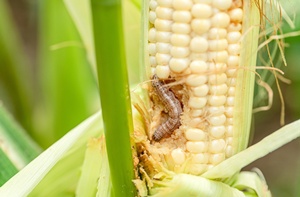
Fall armyworm (FAW) is a polyphagous pest capable of feeding on more than 80 plant species, including maize, sorghum, millet, rice, sugarcane, cotton and several vegetable (CABI, 2017). Larval feeding on leaves, whorls, tassels, and developing cobs leads to defoliation, stunted growth, and reduced yield (Day et al., 2017). The predominant use of chemical insecticides as control method, poses challenges such as resistance development, environmental pollution, high costs, and risks to non-target organisms (Kumela et al., 2018; Harrison et al., 2019).
Chemical insecticides are the most common control measures adopted by farmers, but their continuous use has resulted in environmental contamination, pest resistance, high cost, and health hazards to humans and non-target organisms (Kumela et al., 2018; Harrison et al., 2019). Consequently, eco-friendly pest management alternatives are increasingly being promoted. Botanical insecticides are gaining attention due to their biodegradability, lower toxicity to beneficial organisms, and multiple modes of action (Isman, 2017). Plants such as A. indica, K. senegalensis, H. suaveolens, and C. frutescens contain bioactive compounds with insecticidal, antifeedant, and growth-regulatory properties (Asawalam et al., 2007; Abdullahi et al., 2012; Paula et al., 2000).
This study evaluate the feeding and contact toxicity of methanolic seed extracts of these botanicals and their mixtures against S. frugiperda larvae under controlled laboratory conditions.
MATERIALS AND METHODS
Collection, preparation and extraction of plant material
Seeds of K. senegalensis, A. indica, C. frutescens and H. suaveolens were collected from different locations within Zaria, Kaduna state Nigeria. Khaya fruits were gathered after natural abscission, decorticated, washed and air-dried. Neem seeds were sourced within the Ahmadu Bello University campus, while Hyptis seeds were collected from uncultivated land in Dan-Magaji community. Dried Capsicum seeds were obtained from Samaru market. All were ground separately into fine powder using a high-speed blender.
Extraction was performed via cold maceration using methanol. Two kilograms of each powdered sample were soaked in 6 L of methanol for 48 h in a 12 L aspirator bottle. Filtrate were concentrated using a rotary evaporator to obtain crude extracts. Working concentrations of (2.5%, 5.0% and 10.0% w/v) were prepared using distilled water and 0.1% Tween 80 as emulsifier, sticker, and suffocant. Emamectin benzoate (5% WDG), was prepared following manufacturer recommendations.
Rearing of S. frugiperda and diet formulation
Late-instar larvae (instars 6 – 7) were collected from maize fields at the Institute for Agricultural Research (IAR) and reared on artificial diet following Prasanna et al. (2018). Three liters diet was prepared and dispensed (50 ml each) into small plastic containers (9 cm x 4 cm dia.), allowed to solidify, and cut into portions for bioassays.
Bioassay procedures
Feeding Toxicity Test
This test was conducted using the formulated FAW diet instead of maize leaves used by Edley et al. (2019), Kelita et al. (2020), Emmanuel et al. (2022), and Prasoona et al. (2022). This is to maintain feeding consistency and avoid diet-changing stress. Portions of plain artificial diet were dipped into 50 ml of each extract concentration (2.5%, 5.0% and 10.0% w/v) for 20 seconds and air-dried for 1 hour. The treated diets were transferred to 9 cm diameter rubber bowls, and five second-instar larvae were introduced with a camel-hair brush. Bowls were covered with perforated lids. Treatments including standard check (Emamectin benzoate 5% WDG) and control (water + 0.1% Tween 80), were repeated four times in a Completely Randomized Design (CRD). Percentage mortality was recorded for 7 days at 24 h intervals and corrected using Abbott’s formula (Abbott, 1987).
% Mortality = (Number of dead FAW larvae/ Number of introduced FAW larvae) x 100
Corrected mortality =((% of death in treated −% death in control)/ (100 −% death in control)) x 100
Contact Toxicity Test
Following Aryani and Auamacharoen (2016) and Kelita et al. (2020), 5 µL (1 µL per larva) of each extract concentration was topically applied to the dorsal prothoracic region of five second-instar larvae using a micropipette. Treated larvae were placed on plain diet portions in 9 cm diameter rubber bowls and covered with perforated lids. Percentage mortality was recorded and corrected as in the feeding test.
Data Analysis
Percentage mortality values were arcsine-transformed and analyzed using ANOVA in R studio. Significant means were separated using Student-Newman-Keuls (SNK) test at 5% significance level.
RESULTS
Feeding Toxicity
Result in Table 1 reveals that, mortality varied significantly among extracts, concentrations, and exposure periods. Mixtures containing Hyptis + Neem consistently produced high mortality, comparable to the synthetic insecticide during early exposure periods. Individual extracts of Khaya and Hyptis also performed comparatively well. Significant plant extract x concentration interactions occurred at 24, 48, and 72 h (Table 2).
Contact Toxicity
Similar trends were observed in the contact toxicity assay (Table 3), were Hyptis + Neem mixture produce the highest mortality among botanicals, approaching that of the synthetic check at early intervals. Significant extract x concentration interactions were recorded at 24 h only (Table 4).
DISCUSSION
The study demonstrated that methanolic extracts of K. senegalensis, H. suaveolens, C. frutescens, and A. indica, and their mixtures possess varying degrees of larvicidal activity against S. frugiperda. The superior performance of the Hyptis + Neem mixture suggests possible synergism between their bioactive constituents, consistent with earlier findings (Oparaeke et al., 2005; Bulus et al., 2023). Neem-based mixtures performed particularly well, affirming the role of Azadirachtin as a potent insect growth regulator and feeding deterrent.
The generally weak dose-response trend and decreasing efficacy with longer exposure align with the known rapid degradation of botanicals insecticides (Guleria and Tiku, 2009). Despite this, the short-term potency of the extracts especially neem containing mixtures, indicates strong potential for integration into IPM strategies targeting S. frugiperda.
CONCLUSION AND RECOMMENDATION
The methanolic extracts evaluated in this study exhibited notable feeding and contact toxicity against Spodoptera frugiperda under laboratory conditions. Among all treatments, the Hyptis + Neem mixture produced consistently high larval mortality, performing comparably to the synthetic insecticide. This results highlight the potential of botanical mixtures as eco-friendly alternatives for FAW (Fall armyworm) management. Field trials are recommended to validate laboratory findings and assess persistence, formulation, and application feasibility.
REFERENCES
Abbott W.S.A. (1987). Method of Computing the Effectiveness of an Insecticide. Journal of the American Mosquito Control Association, 3: 302-303.
Abdullahi N., Yahya S., Yushau M., Tukur Z. (2012). Laboratory evaluation of the effect of Khaya senegalensis and Cassia occidentalis ethanolic leaves extracts against worker termites (Isoptera: Rhinotermitidoe) on treated wood sample. Journal of Stored Products and Postharvest Research, 3: 152–155.
Amusan A.A.S., Idowu A.B., Arowolo F.S. (2005). Comparative toxicity effect of bush tea leaves (Hyptis suaveolens) and orange peel (Citrus sinensis) oil extract on larvae of the yellow fever mosquito Aedes aegypti . Tanzania Health Research Bulletin, 7: 174-178.
Aryani D.S., Auamcharoen W. (2016). Repellency and contact toxicity of crude extracts fromthreeThai plants (Zingiberaceae) against maize grain weevil, Sitophilus zeamais (Motschlusky) (Coleoptera: Curculionidae). Journal of Biopesticides, 9: 52–62.
Asawalam E.F., Emosairue S.O., Ekeleme F., Wokocha R.C. (2007). Insecticidal effect of powdered parts of eight Nigeria plants Species against maize weevil Sitophilus zeamis Motschulsky (Coleoptera: Curculinidae). Electronic Journal of Environmental Agricultural and Food Chemistry, 6: 2526-2533.
Birhanu S., Tadele T., Mulatu W., Gashawbeza A., Esayas M. (2019). The Efficacy of Selected Synthetic Insecticides and Botanicals against Fall Armyworm, Spodoptera frugiperda, in Maize. Insects,
Bulus J., Kwanashie A.J., Utono I.M., Habila J.D., Alao S.E.L., Zarafi A.B., Bamaiyi L.J., Abubakar A., Kashina B.D. (2023). In vitro ovicidal activity of bio-pesticidal compounds on meloidogyne incognita eggs. Nigerian Society of Nematologists (NISON) 6th Biennial Conference Abuja October, 2023.
CABI (2017). Invasive Species Compendium: Spodoptera frugiperda (Fall armyworm). Centre for Agriculture and Bioscience international.
Day R., Abrahams P., Bateman M., Beale T., Clottey V., Cock M., Witt A. (2017). Fall armyworm: Impact and implications for Africa. Outlooks on Pest Management, 28: 196 – 201.
Edley F.B., Bezerra R.G.S., Antônio C.S.M., André C.S.A., Flávio G.J., Ednaldo C.R., Márcio S.A. (2019). Toxicity of Machaerium opacum (Fabaceae) leaf extracts against Fall Armyworm (Spodoptera frugiperda (J. E. Smith) (Lepidoptera: Noctuidae). Journal of Agricultural Science, 11: 292.
Falko P., Drijfhout E., David M. (2010). Comparehensive natural products II: phragmalins. Chemical Ecology ScienceDirect.
FAO (2017). Fall Armyworm outbreak, a blow to prospects of recovery for southern Africa. Rome, Italy: FAO.
Goergen G., Kumar P.L., Sankung S.B., Togola A., Tamò M., (2016). First report of outbreaks of the fall armyworm Spodoptera frugiperda (J.E. Smith) (Lepidoptera, Noctuidae), a new alien invasive pest in West and Central Africa. PLoS One 11: e0165632
Guleria S., Tiku A.K. (2009). Integrated pest management. In book: Integrated Pest Management: Innovation-Development Process, 317-329.
Harrison R., Thierfelder C., Baudron F., Chinwada P., Midega C., Schaffner U., Van den Berg J. (2019). Agro-ecological options for fall armyworm management: Providing low-cost, smallholder friendly solutions to an invasive pest. Journal of Environmental Management, 243: 318 – 330.
Isman M.B. (2017). Bridging the gap: Moving botanical insecticides from the laboratory to the farm. Industrial Crops and Products, 110: 10 – 14.
Kamara A.Y., Kamai N., Omoigui L.O., Togola A., Ekeleme F., Onyibe J.E. (2020). Guide to maize production in northern Nigeria: lbadan, Nigeria. 18.
Kelita P., Yolice T., Trust K., Vernon H.K., Philip C.S., Steven R. B. (2020). Bioactivity of Common Pesticidal Plants on Fall Armyworm Larvae (Spodoptera frugiperda). Plants, 9: 112.
Kumela T., Simiyu J., Sisay B., Likhayo P., Mendesil E., Gohole L., Tefera T. (2018). Farmers’ knowledge, perceptions, and management practices of the new invasive pest, fall armyworm (Spodoptera frugiperda) in Ethiopia and Kenya. International Journal of Pest Management, 64: 332 – 340.
Lucena D.C., Bertholdo-vargas L.R., Silva W.C. (2017). Biological activity of Piper aduncum extracts on anticarsia gemmatalis (h¨ubner) (Lepidoptera: erebidae) and Spodoptera frugiperda (J. E. Smith) (Lepidoptera: Noctuidae). Anais da Academia Brasileira de Ciˆencias, 89:1869–1879.
Oparaeke A.M., Dike M.C., Amatobi C.I. (2005). Botanical pesticide mixtures for insect pest management on cowpea, Vigina unguiculata (L.) Walp Plants. The pod borer Maruca vitrata Fab. (Lepidoptera: Pyralidae) and pod sucking bug, Claigralla tomentosicollis Stal (Heteroptera: Coreidae). Agricultura Tropica et Subtropica, 28: 33-38.
Paula V.F., Paula L.C.D.A., Demuner, A.J., Pilo-Veloso, D., Picanço M.C. (2000). Synthesis and insecticidal activity of new amide derivatives of piperine. Pest Management Science, 56:168–174.
Prasanna B.M., Joseph E.H., Regina E., Virginia M.P. (eds). (2018). Fall Armyworm in Africa: A Guide for Integrated Pest Management, First Edition. Mexico, CDMX: CIMMYT.
Prasoona U.S., Kolhe A.V., Tathode V.R., Tidke V.N. (2022). Antifeedant activity of some botanicals against Spodoptera frugiperda (JE Smith) under laboratory condition. The Pharma Innovation Journal, 11: 101-104.
Queensland (2013). Maize Insect Pest Management-Northern Grains Region. Compiled by Kate Charleston, March 2013. Qeensland Government. Department of Agriculture, FisheryandForestry,13pp.
Solomon W.J., Azare B.A (2019). Insecticidal properties of garlic (Allium sativum) aqueous extracts on beans (Phaseolus vulgaris) and maize (Zea mays) pest. Direct Research Journal of Biology and Biotechnology, 5: 24-33.